
Buyer Decision CenterBuyer Decision Center
2026年1月14日
How to Choose High-Quality Electric Tricycles for Internal Logistics Operations
How to Choose High-Quality Electric Tricycles for Internal Logistics Operations A Practical Guide for Buyers in Europe and the Middle East Electric tricycles are no longer just low-cost transport tool
How to Choose High-Quality Electric Tricycles for Internal Logistics Operations
A Practical Guide for Buyers in Europe and the Middle East
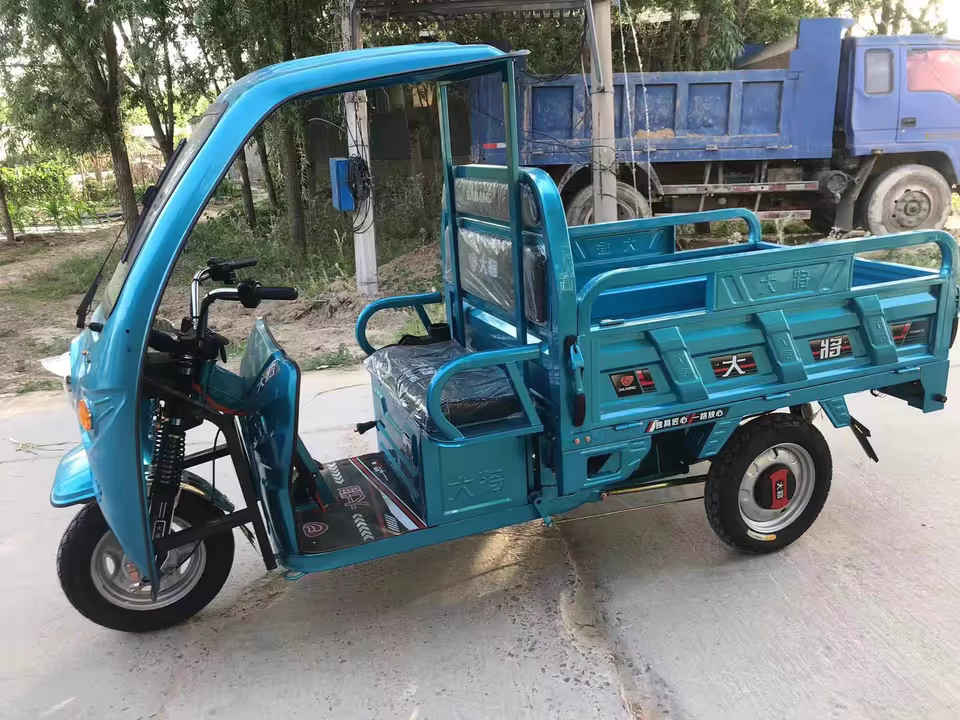
Electric tricycles are no longer just low-cost transport tools. In Europe and the Middle East, they are increasingly deployed as internal logistics work vehicles in ports, industrial parks, warehouses, factories, and large outdoor facilities. Whether used as Electric Cargo Tricycles for material handling, Electric Work Vehicles for internal transport, or Electric Utility Tricycles for last-mile and site logistics, their real value lies in operational stability, lifecycle cost control, and fleet consistency. This article is written from an internal logistics operations perspective, helping buyers avoid common procurement pitfalls and select electric tricycles that truly perform in real working environments.
The Real Procurement Challenge: Vehicles That Work on Paper, Not on Site
Many buyers first encounter electric tricycles through specifications and price lists. However, in real internal logistics operations—especially in hot climates, outdoor sites, ports, and industrial facilities common in the Middle East and Southern Europe—vehicles that appear acceptable on paper often fail to deliver consistent performance. The core issue is not whether an electric tricycle “can be used,” but whether it can be reliably operated day after day with predictable behavior and manageable maintenance.
Structural Consistency Matters More Than Visual Appearance
One of the most overlooked problems in low-cost electric tricycles is inconsistent frame and surface treatment quality. Variations in steel thickness, welding execution, and corrosion protection lead to uneven durability across fleets. In environments with high humidity, salt exposure, dust, or frequent washing—typical in ports, logistics hubs, and outdoor industrial sites—poor surface treatment accelerates corrosion and structural fatigue. From an internal logistics perspective, standardized frame construction and automotive-grade corrosion protection are essential to maintain fleet consistency and reduce long-term maintenance risk.
Payload Ratings Must Match Continuous Operational Reality
Advertised payload figures often fail to reflect continuous, high-frequency operation. While many electric cargo tricycles claim 500–1000 kg capacity, real-world internal logistics use involves repeated starts, stops, turning under load, and uneven surfaces. Vehicles designed without sufficient structural margin experience premature wear, deformation, or driveline stress. For buyers in Europe and the Middle East, where operational intensity is often underestimated during procurement, verifying that payload capacity is engineered for sustained use, not short demonstrations, is critical.
Battery Systems Should Be Selected Based on Operating Patterns, Not Marketing Claims
Battery performance variability remains a major source of dissatisfaction. In internal logistics, the question is not maximum theoretical range, but predictable daily operation under temperature fluctuations. High ambient temperatures in the Middle East and seasonal extremes in Europe place additional stress on battery systems. A well-matched battery configuration—whether lithium-ion or lead-acid—should prioritize thermal stability, cycle life, and charging predictability rather than headline range numbers. This ensures vehicles remain operational throughout shifts without disrupting logistics workflows.
Safety and Control Systems Are Operational Risk Factors, Not Optional Features
Electric tricycles used in internal logistics often operate near workers, machinery, and valuable goods. Compromises in braking performance, steering geometry, or suspension tuning introduce hidden operational risks. In sloped yards, loading ramps, or uneven industrial surfaces, insufficient braking or poor stability can quickly escalate into safety incidents. For fleet buyers, especially in regulated European markets, these technical fundamentals should be evaluated as risk management measures, not cost-saving opportunities.
After-Sales Support Defines True Lifecycle Cost
The real cost of an electric tricycle fleet is determined after delivery. Buyers frequently underestimate the importance of spare parts availability, configuration consistency, and technical documentation. In Europe and the Middle East, where logistics downtime directly impacts operational efficiency, vehicles that require frequent on-site modification or lack standardized components become liabilities. Selecting a supplier who defines clear configuration boundaries and supports fleet-level maintenance planning significantly reduces long-term operating costs.
A Shift in Perspective: From “Buying Vehicles” to “Deploying Logistics Assets”
High-quality electric tricycles should be evaluated as logistics assets, not consumer products. For internal logistics operations, the priority is not the lowest purchase price, but stable performance across environments, predictable maintenance, and fleet scalability. By focusing on engineering consistency, environmental adaptability, and operational support, buyers in Europe and the Middle East can build electric tricycle fleets that integrate smoothly into their logistics systems and deliver measurable long-term value.