
Buyer Decision CenterBuyer Decision Center
2026年3月4日
Electric Cargo Tricycle Matching Guide: How to Choose the Right Motor, Battery & Load Capacity for Industrial Use
Electric Cargo Tricycle Matching Guide: How to Choose the Right Motor, Battery & Load Capacity for Industrial Use Selecting the correct motor power and battery configuration is the most critical fac
Electric Cargo Tricycle Matching Guide: How to Choose the Right Motor, Battery & Load Capacity for Industrial Use
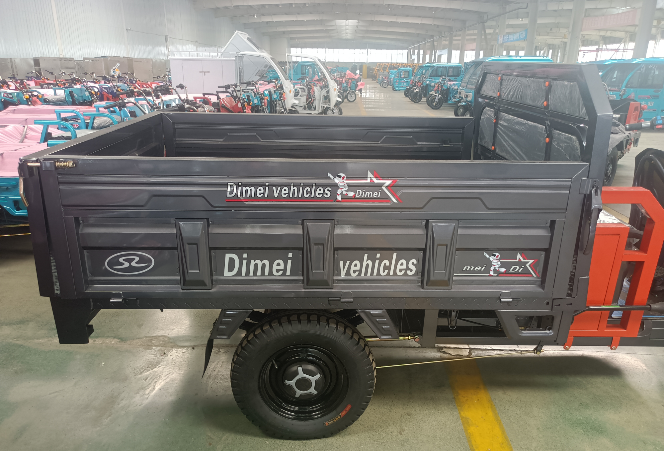
Selecting the correct motor power and battery configuration is the most critical factor when purchasing an industrial electric cargo tricycle. While many buyers focus on nominal load capacity or initial price, real-world performance depends on proper engineering matching between motor wattage, battery voltage, and actual operational load.
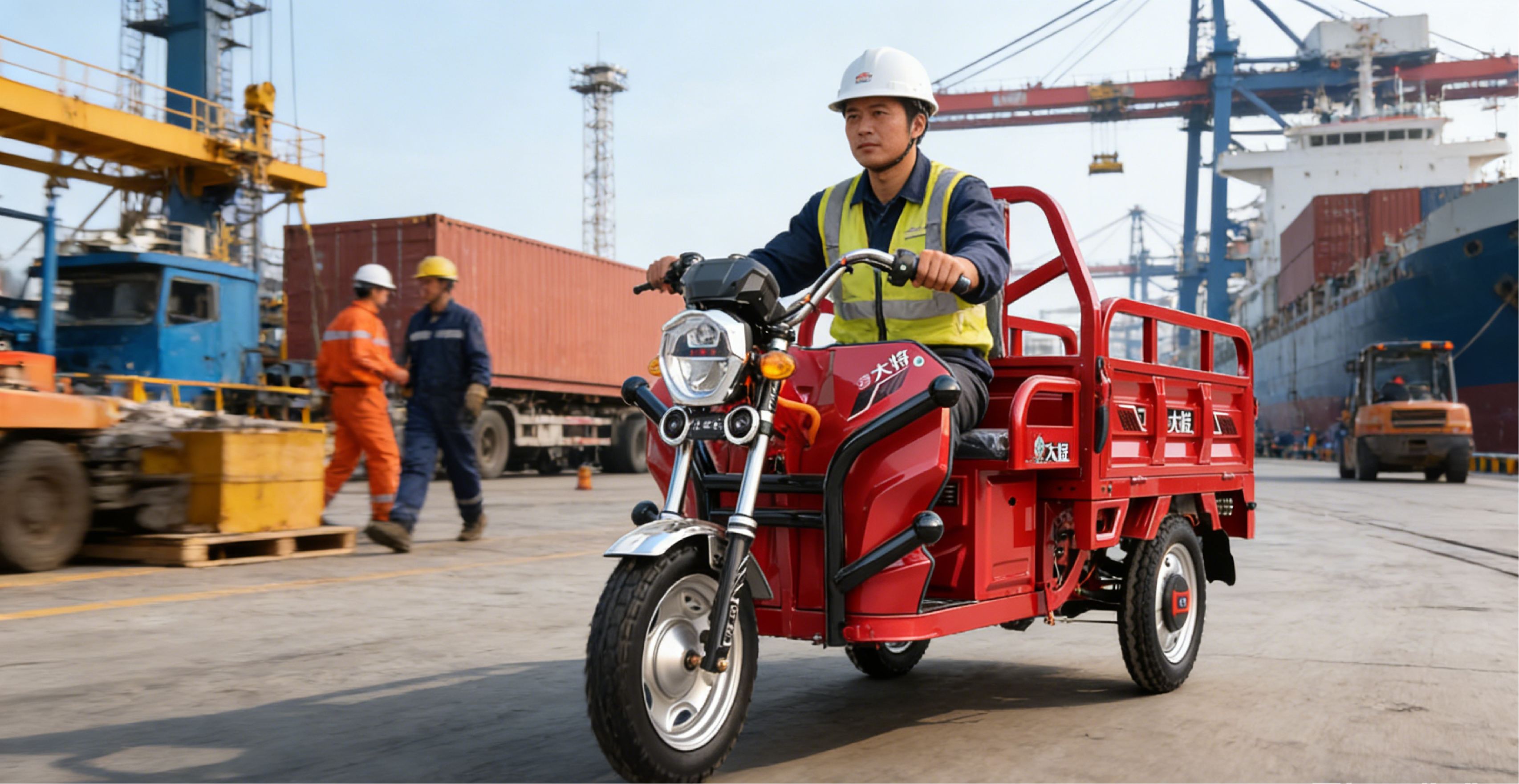
In industrial environments such as warehouses, ports, construction sites, factory yards, and logistics parks, electric cargo tricycles operate under high frequency and heavy-load conditions. Incorrect matching leads to overheating, voltage drop, reduced climbing ability, shortened service life, and increased total operating cost.
This guide explains how to correctly match motor power and battery systems across different load capacities — with particular focus on the 800kg–1200kg industrial segment.
Understanding Motor Power vs Real Load Capacity
Motor wattage printed on a label does not automatically equal true industrial carrying capacity. What determines performance under load is continuous torque output, controller current rating, battery discharge capability, and drivetrain strength.
Below is a practical industry reference for motor-to-load matching:
Motor Power | Recommended Real Load Capacity | Typical Application |
800W–1000W | 300–500kg | Light delivery, home use |
1200W–1500W | 500–800kg | Urban distribution/ |
1800W–2000W | 800–1200kg | Industrial logistics/Heavy-duty |
2500W–3000W+ | 1500–2000kg+ | High Heavy-duty industrial transport |
For most industrial customers operating within the 800kg–1200kg range, a properly engineered 2000W motor provides the optimal balance between torque output, durability, and cost efficiency.
A 1500W motor may move a 1000kg load under light conditions, but for continuous industrial operation, 2000W offers more stable performance and lower long-term risk.
Why a 2000W Motor Cannot Support 2000kg Continuous Load
Some buyers attempt to use a 2000W motor for 2000kg loads in order to reduce cost. While the vehicle may move on flat terrain for short periods, this configuration is technically underpowered for industrial use.
When overloaded, the system compensates by drawing excessive current from the battery. This results in:
- Rapid heat buildup in the motor windings
- Voltage sag under load
- Reduced climbing performance
- Accelerated motor and battery degradation
For genuine 1500kg–2000kg heavy-duty applications, a 2500W or 3000W motor with a high-capacity 72V battery system is the minimum recommended configuration.
This distinction is important: 2000W is ideal for 1200kg industrial use, but insufficient for 2000kg heavy-duty transport.
How to Match Battery Voltage and Capacity with Motor Power
Electric cargo tricycle performance depends heavily on battery configuration. Since Power = Voltage × Current, lower voltage systems require higher current to deliver the same output, increasing heat and energy loss.
Recommended motor–battery matching guidelines:
Motor Power | Recommended Battery System |
1000W | 60V 45–52Ah |
1500W | 60V 52Ah or 72V 52Ah,72V 58Ah |
2000W (Heavy Duty) | 72V 58Ah/ minimum or 72V 58Ah,72V75Ah |
3000W (High Heavy Duty) | 72V 75Ah or higher capacity systems |
For 800kg–1200kg industrial electric cargo tricycles, a 72V platform significantly improves voltage stability under load compared to 60V systems. It reduces controller stress, improves climbing performance, and extends overall system lifespan.
Using an undersized battery with a high-power motor leads to rapid voltage drop and shortened driving range, particularly under full-load conditions.
Recommended Configuration by Load Category
To simplify selection, the following configurations are recommended:
For 800kg–1200kg Industrial Applications (Mainstream Segment)
- 2000W motor
- 72V 52Ah–75Ah battery system
- Reinforced chassis structure
- Industrial-grade rear axle
This configuration is suitable for warehouses, factory internal transport, market logistics, and medium-duty commercial operations. It provides stable torque output, reliable uphill performance, and balanced cost efficiency.
For 1500kg–2000kg Heavy-Duty Applications
- 3000W motor
- 72V 75Ah or higher capacity battery
- Heavy-duty axle system
- Reinforced frame structure
This setup is required for continuous heavy-load industrial environments or slope-intensive applications.
Industrial vs Agricultural Electric Cargo Tricycles
Significant price differences in the market are usually caused by variations in:
- Motor copper content and winding design
- Controller current rating
- Battery discharge capacity
- Axle load-bearing strength
- Frame steel thickness
Agricultural or low-frequency models are designed for intermittent light-duty use. Industrial electric cargo tricycles must sustain continuous torque output and structural stress under full load. Therefore, engineering matching is more important than nominal labeling.
Frequently Asked Questions
Can I use a 2000W motor for 2000kg load to save cost?
For short-distance, light-duty use on flat terrain, the vehicle may move. However, for continuous industrial transport, it is underpowered and may cause overheating and premature component failure. A 3000W motor is recommended for stable 2000kg operation.
What is the ideal motor for a 1200kg electric cargo tricycle?
A 2000W motor paired with a 72V battery system provides the best balance between durability, climbing ability, and operational efficiency for 1000kg–1200kg industrial applications.
Does higher battery voltage improve performance?
Yes. Higher voltage reduces current demand for the same power output, improving efficiency, reducing heat generation, and extending motor and battery lifespan.
Final Recommendation: Match Engineering to Real Operational Load
When selecting an industrial electric cargo tricycle, focus on real load requirements and operating conditions rather than nominal specifications or lowest price.
For 800kg–1200kg mainstream industrial transport, a properly engineered 2000W motor with a 72V battery system delivers reliable and cost-effective performance.
For 1500kg–2000kg heavy-duty applications, a 3000W motor platform becomes necessary to ensure stability and durability.
Correct motor–battery–load matching is the foundation of long-term operational reliability and lower total cost of ownership.