Buyer Decision CenterBuyer Decision Center
2026年2月1日
Reducing TCO in Port Internal Logistics: How Define "High-Quality" Through Operational Certainty
Breaking the Hidden Costs in Ports: hanride Defines "High-Quality" Internal Logistics for Operational Certainty Introduction: Port Internal Logistics: The Underestimated "Underlying System," Accumulat
Reducing TCO in Port Internal Logistics: How Define "High-Quality" Through Operational Certainty
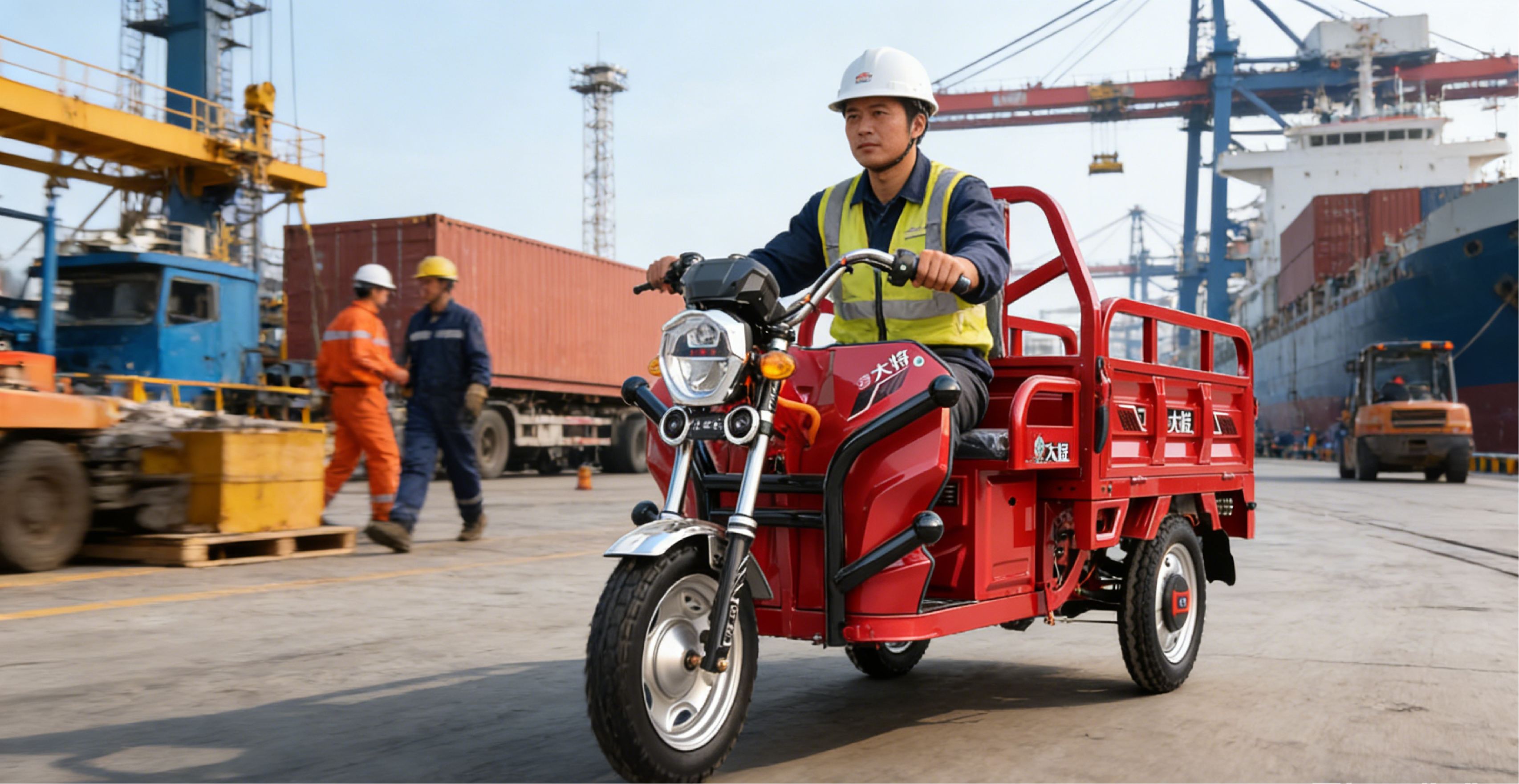
Quick Insight: In 24/7 port operations, internal logistics is the "underlying system" that often accumulates massive hidden costs. High-quality logistics isn't about short-term specs; it’s about Operational Certainty—ensuring stable uptime and predictable maintenance across a standardized fleet.
1. The Hidden Cost Trap in Port Operations
In busy port yards, the high-frequency movement of documents, spare parts, and tools is often underestimated. When equipment fails, the costs aren't always visible. Instead, they manifest as:
- Disrupted Schedules: Minor delays in internal logistics ripple into major vessel turnaround times.
- Maintenance Chaos: Non-standardized fleets scatter maintenance efforts and increase spare part inventory stress.
- Personnel Inefficiency: Unstable equipment forces operators to spend more time managing breakdowns than moving cargo.
To solve this, procurement must move beyond "initial price" and focus on Total Cost of Ownership (TCO).
2. The Definition of "High-Quality": The 3 Pillars of Certainty
Having specialized in heavy-duty port logistics, we defines high quality through systemic capability. Truly high-quality equipment must meet three core conditions:
I. Stable Uptime (Beyond Short-Term Performance)
Port environments—marked by salt spray, dust, and constant vibration—are "equipment killers." We prioritize consistency over 12, 24, and 36 months, validating our structural designs
against actual port duty cycles.
II. Predictable Low Total Cost of Ownership (TCO)
The purchase price is just the tip of the iceberg. True value comes from minimizing unplanned downtime and reducing the complexity of routine maintenance through modular design.
III. Management Efficiency Through Standardization
Based on extensive field data, we have converged port demands into three rigorously validated configurations:
Model | Core Advantage | Best Use Case |
L-STD | Stable Reliability | Daily, short-frequency internal transport. |
L-HT | Thermal Resilience | High-temperature regions (e.g., UAE/Saudi Arabia). |
L-HD | Structural Durability | Heavy-duty, high-intensity operations in corrosive zones. |
3. Engineering for Extremes: Technical Deep Dives into Uptime
To achieve "Operational Certainty," equipment must be engineered for the specific physics of the environment. Our L-HT and L-HD configurations are built on two technical pillars:
3.1 Thermal Resilience: Defeating the 45°C+ Challenge (UAE & Middle East)
In regions like the UAE, high ambient heat combined with high-frequency duty cycles is the primary cause of battery swelling and BMS protective shutdowns. Our L-HT Configuration addresses this through:
- Active Airflow & Heat Dissipation: Unlike standard "sealed" battery boxes, our L-HT chassis features optimized ventilation channels. This reduces internal battery temperature by 5–8°C during peak operation.
- High-Temperature Calibrated BMS: We utilize specialized thermal sensors and recalibrated BMS logic that prioritizes balanced cell discharge, preventing "hot spots" that lead to premature aging.
- Field Evidence: Data from our Middle Eastern port clients confirms that this thermal optimization results in 15% higher capacity retention after 24 months compared to non-optimized electric fleets.
3.2 Anti-Corrosion Engineering: Defeating Salt-Mist & Humidity (Europe & Coastal Ports)
Coastal ports face Atmospheric Corrosion, leading to terminal oxidation and harness failures. Our L-HD Configuration counters this with a multi-layer strategy:
- Marine-Grade Connector Sealing: We use IP67-rated sealed connectors with anti-oxidation treatment on all critical joints. This prevents the "wicking effect" where salt-mist travels through wires into the controller.
- Multi-Stage Frame Coating: Our frames undergo automotive-grade E-Coat (Electrophoretic Coating) followed by specialized powder top-coat for superior salt-spray resistance.
- Condensation Management: Electrical compartments include drainage paths and "breather" valves to prevent internal condensation—a common cause of short circuits in fluctuating European climates.
4. Why Battery Management Matters: From Luck to Engineering
Within the TCO structure, the battery is the most critical component. In port scenarios, we advocate for Duty-Cycle Matching:
- Lead-Acid vs. LFP: For high-frequency industrial use, Lithium Iron Phosphate (LFP) is the strategic choice due to its 2,000–4,000 cycle life and thermal stability.
- Charging SOP: We help fleets implement shift-based charging plans. This avoids deep discharge (the #1 killer of lead-acid) and keeps the battery in its "healthy SOC window."
5. Our Promise: A Strategic Investment in Certainty
In port internal logistics, equipment procurement is a long-term strategic investment. A "cheap" vehicle that lacks standardized operational states ultimately leads to higher management risks and uncontrollable costs.
What hanride provides is more than just a vehicle; it is a predictable, repeatable, and manageable internal logistics asset. Our goal is to ensure that every day's internal operation remains consistently within your precise control—reducing hidden costs and building a solid foundation for port efficiency.
FAQ (SEO Optimized)
Q1: How do you reduce maintenance costs for port fleets?
A: Through standardization (L-STD/HT/HD) and modular components that reduce spare part variety and unplanned downtime.
Q2: Does UAE heat affect electric tricycle lifespan?
A: Yes. Without active thermal management, heat accelerates battery aging. Our L-HT configuration uses specialized airflow and BMS logic to maintain 15% better capacity retention.
Q3: How to prevent electrical failures in coastal ports?
A: By using IP67-rated connectors, E-Coat frame protection, and anti-condensation designs to block salt-mist and humidity.