
Commercial Utility Vehicles
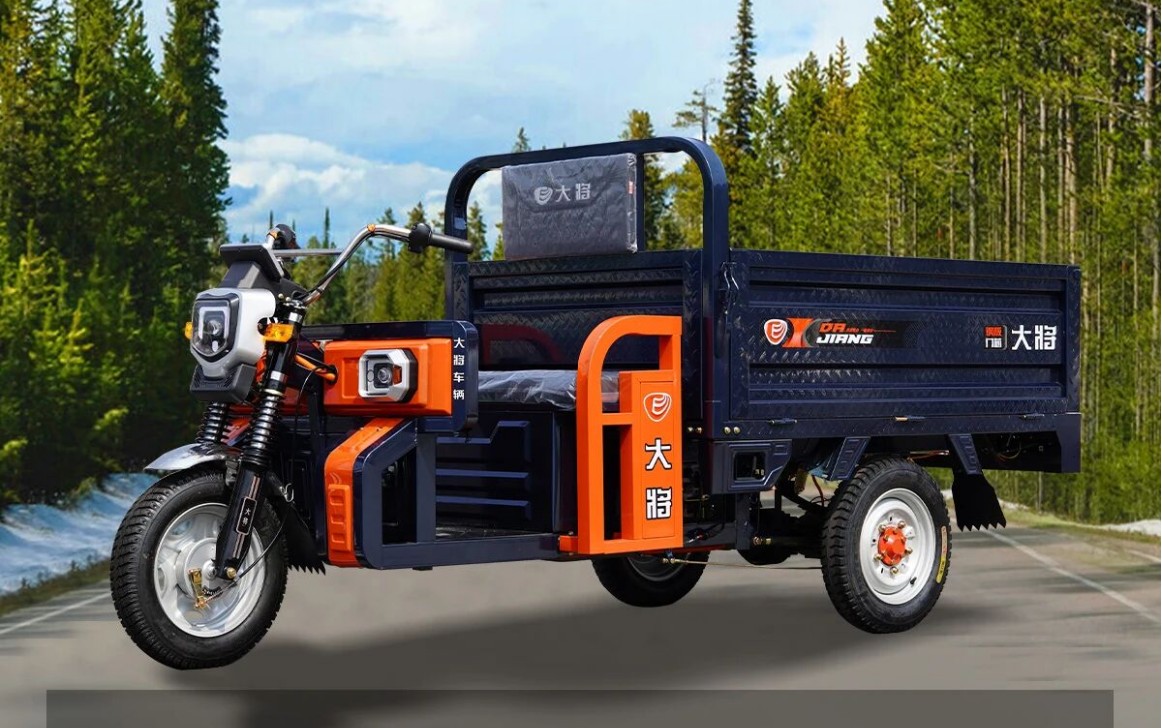
1.6M Standard Electric Cargo Tricyclecle
The L-STD is a standardized electric cargo tricycle engineered for warehouse and logistics park operations. Designed for single-shift and steady internal transport cycles, it prioritizes predictable uptime, simplified maintenance, and scalable fleet deployment — without unnecessary over-engineering.
1.6M Standard Electric Cargo Tricycle
Balanced Performance for Daily Transport
This 1.6m electric cargo tricycle is designed for reliable short-distance transport across rural, industrial, and semi-urban environments.
With a balanced payload capacity and reinforced structure, it provides stable daily performance for routine logistics tasks without unnecessary complexity.
A practical choice for operators who need consistency, durability, and cost efficiency in everyday use.
1. Application Scenarios
Designed for Daily Transport & General Logistics
Suitable for:
- Rural goods transport
- Agricultural product delivery
- Factory internal material movement
- Small-scale wholesale distribution
- Village-to-market logistics
Common working environments:
- Rural roads
- Semi-urban areas
- Farms & plantations
- Industrial yards
2. 1.6M Cargo Platform + Practical Payload
Balanced Size for Everyday Efficiency
- Cargo Box: 1600 × 1100 mm
- Rated Load: 700 kg
- Suitable for mixed cargo types
- Supports daily repetitive transport tasks
Designed to:
- Reduce unnecessary return trips
- Improve loading efficiency
- Balance capacity with maneuverability
3. Reinforced Structure for Daily Use
Built for Stability, Not Over-Engineering
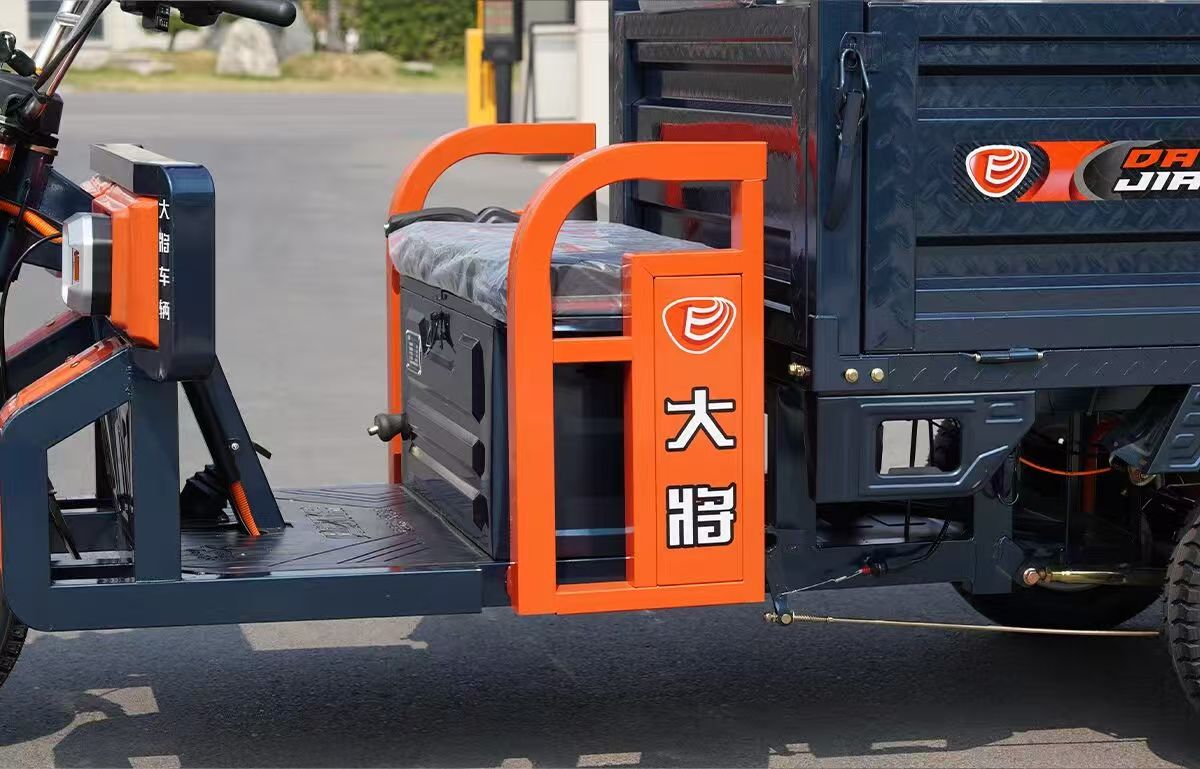
- Reinforced steel cargo body
- Steel door core + steel floor structure
- Integrated stamped panel design
- Thickened structural materials
Benefits:
- Improved structural rigidity
- Better resistance to daily wear and impact
- Longer service life under repeated use
4. Driving Comfort & Control
Simple Operation for Everyday Users
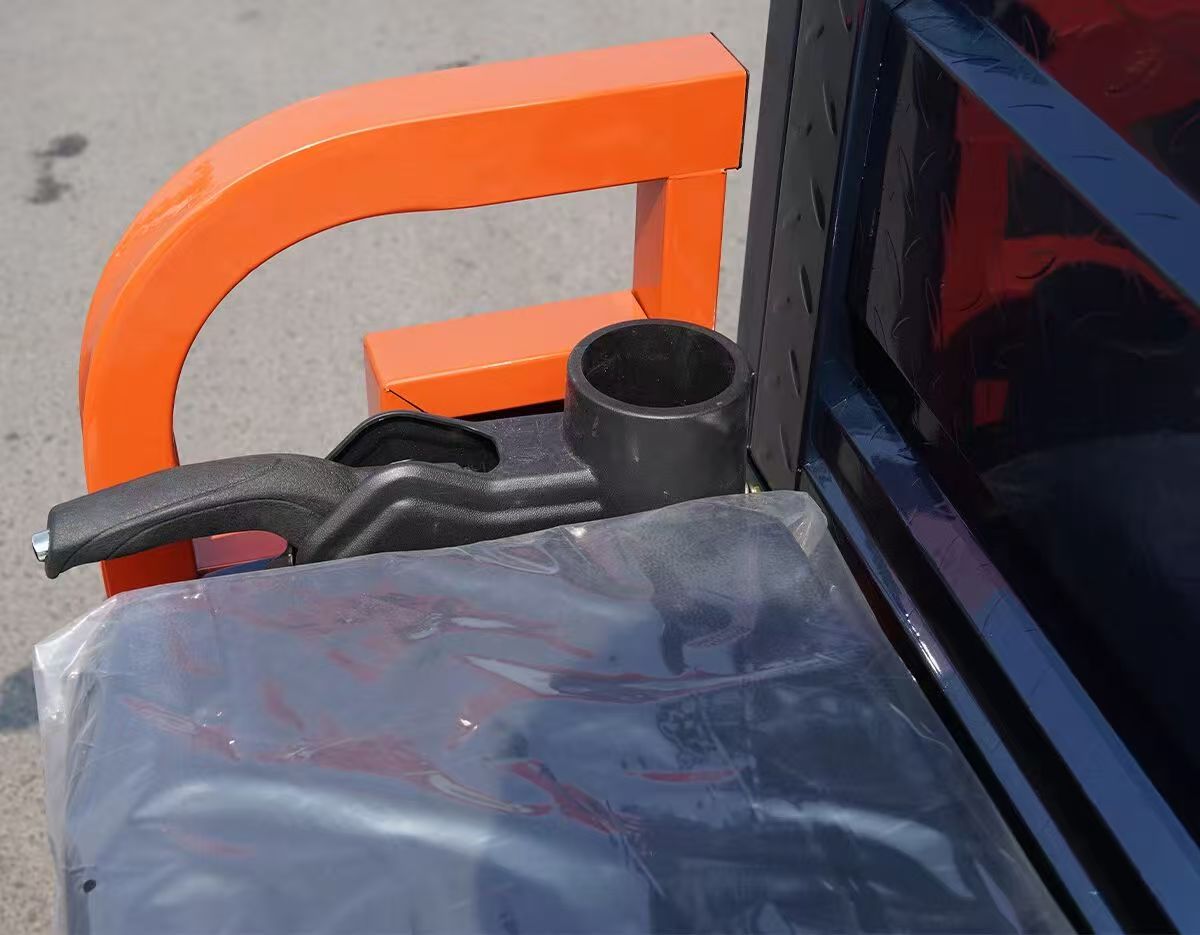
- Ergonomic driver layout
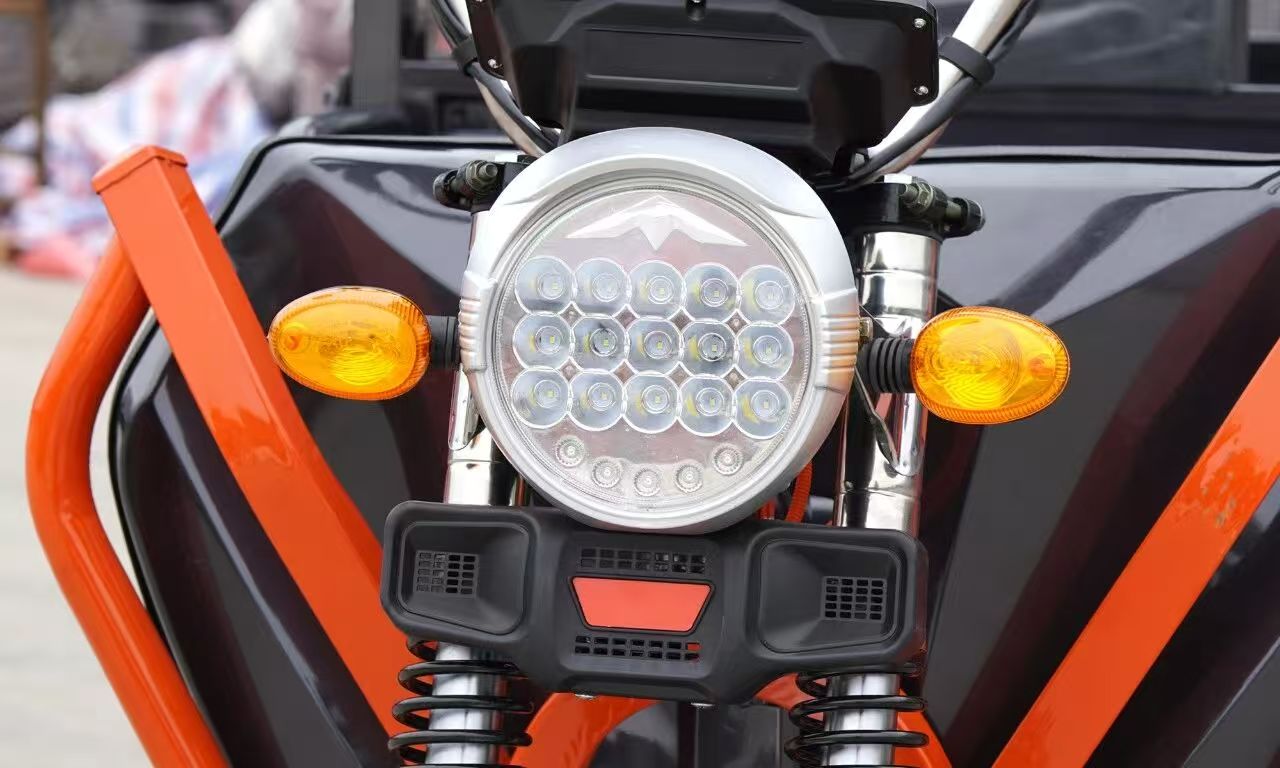
- Clear instrument display
- Smooth throttle response
Designed for:
- Daily operators
- First-time drivers
- Long-hour routine use
Designed for:
- Short-distance transport
- Repetitive daily logistics cycles
- Cost-efficient operation
5. Road Adaptability
Reliable on Rural & Mixed Road Conditions
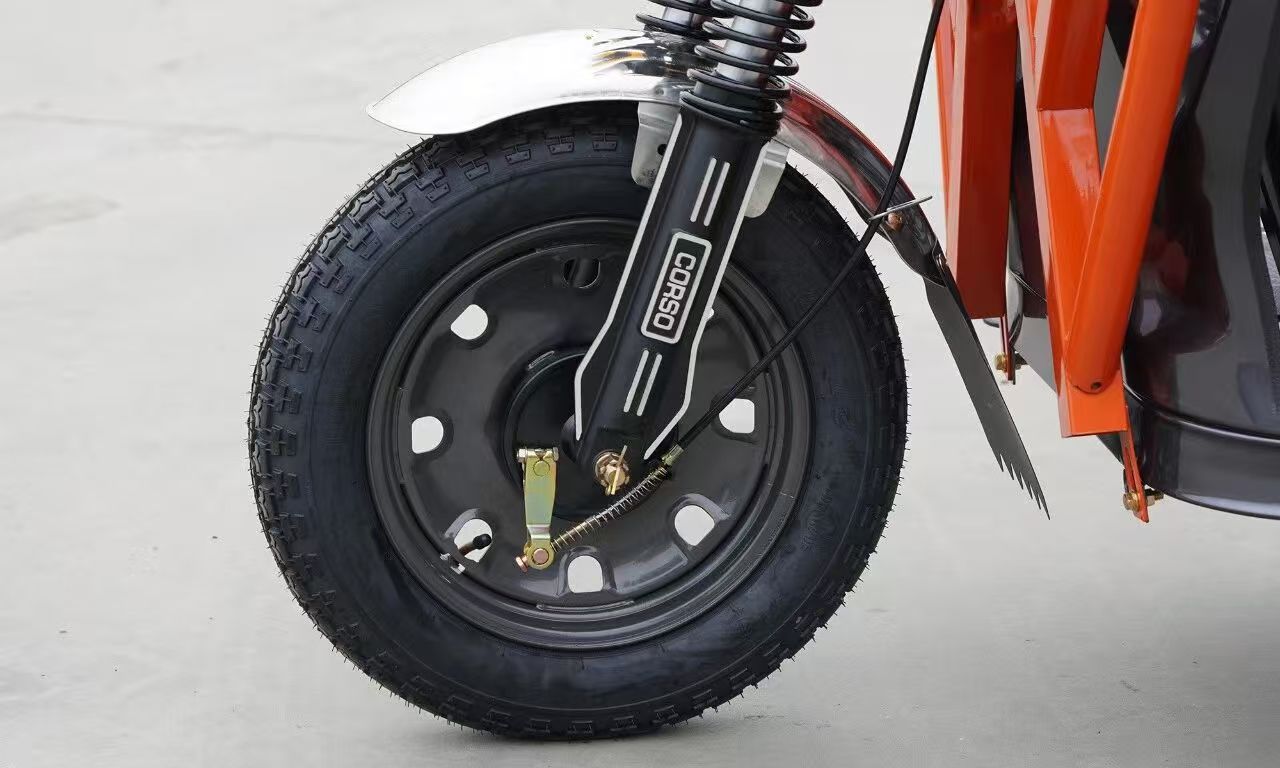
- Tire configuration:
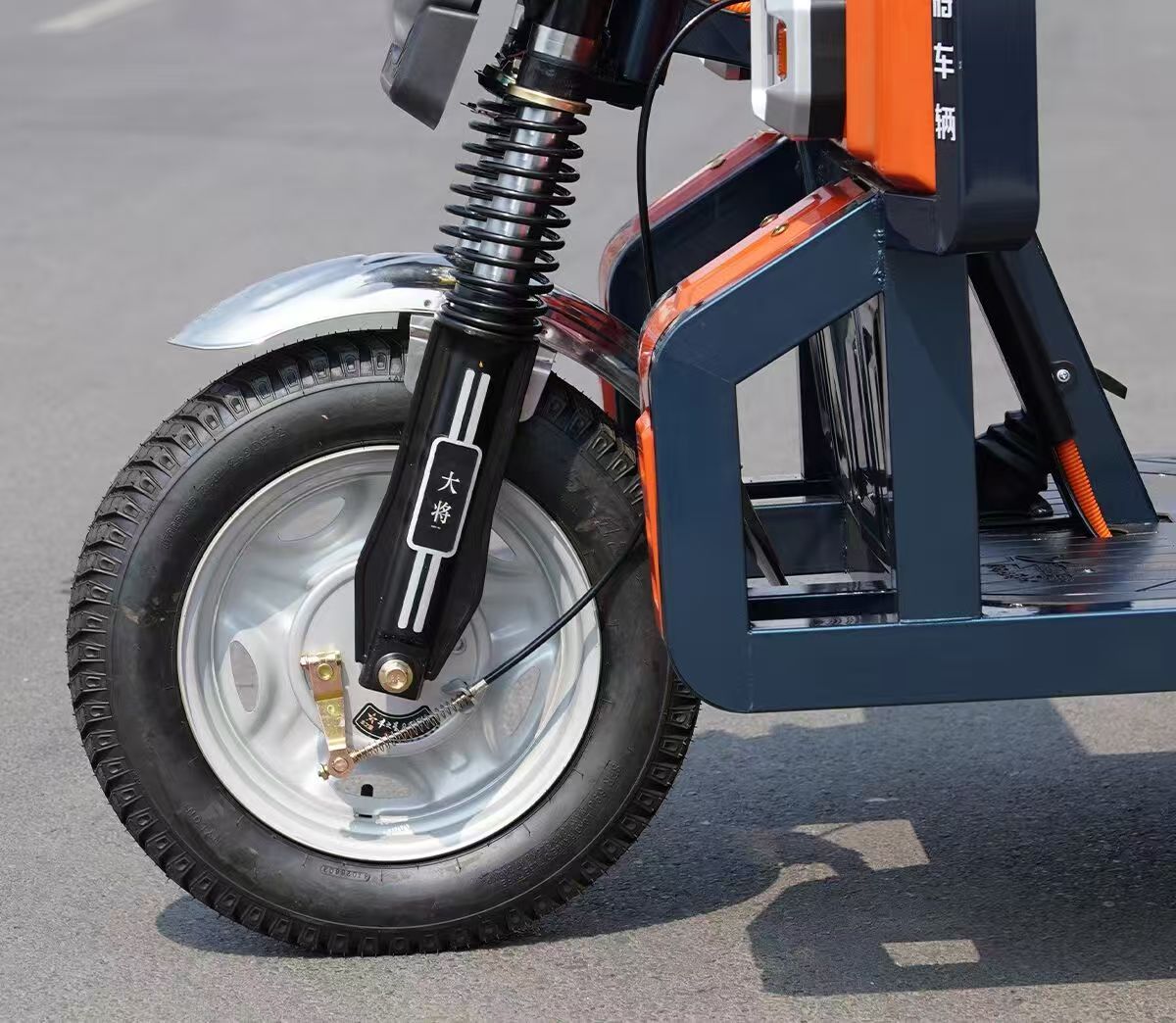
- Front: 3.75-12
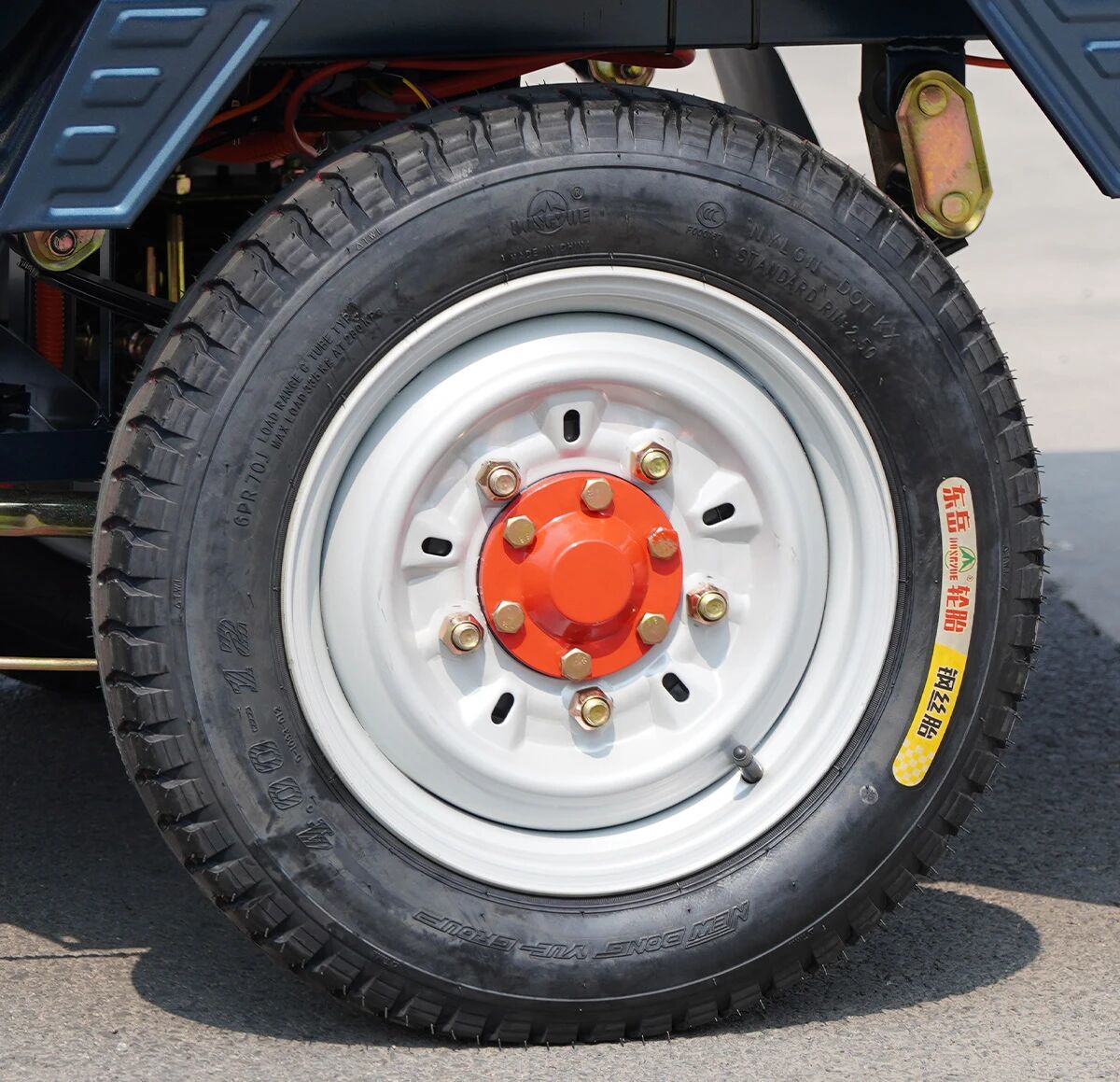
- Rear: 4.00-12 flat-profile tires
- Reinforced tire structure for better puncture resistance
- Stable traction on gravel and uneven surfaces
Cargo box features:
- Three-way opening structure
- Flexible loading and unloading
- Improved accessibility in tight spaces
6. Power & Control System
Stable Output for Daily Transport Tasks
- Motor: 1500W electric motor
- Controller: 18-tube dual-row controller
- Rear Axle: 160 integrated full-floating rear axle with gear shift
Performance characteristics:
- Stable power output under load
- Reliable climbing capability for daily use
- Smooth acceleration for controlled low-speed operation
7. Technical Specifications
Item | Specification |
SizeL×W×H(mm) | 3100*1180*1365 |
Cargo Box | 1.6M × 1.1M |
Payload | 700 KG |
Motor | 1500W PMSM |
Battery | 60V / 72V |
Battery Capacity | 72V 58Ah |
Range | 65–70 km |
Max Speed | 35 km/h |
Vehicle Weight (no battery) | 255 KG |
Battery | Lead-acid batteries |
Battery wight | 72V58HA |
Optional battery | Lithium battery |
Front Brake system | 130drum brake |
Rear shock system | 180drum brake |
shock absorption |
φ43 External spring shock absorption |
Frame | split frame |
Cargo Box size(mm) | 1.6m*1.1m |
Ground clearance | 220 |
Turning radius | 45* |
Wheelbase | 2060 |
Rear track (mm) | 980 |
Front tire size | 400-12Heavy-duty tires |
Rear tire size | 450-12Heavy-duty tires |
Loading quantity(SKD)(40HQ) | 35PCS |
Loading quantity(CKD)(40HQ) | 60 PCS |
Delivery time | 20-25 Days |
CTA
A Practical Workhorse for Everyday Transport
If your operation requires stable performance, simple maintenance, and cost-effective logistics,
this configuration provides a reliable solution for daily use.
?Request Configuration Advice