
Oct 12, 2026Product & Application
Case Study:Why One Brazilian Farm Imported an Electric Cargo Tricycle from China
Discover how a Brazilian farm improved productivity by importing an electric cargo tricycle from China. Learn about costs, farm logistics, agricultural utility vehicles, and CKD assembly opportunities
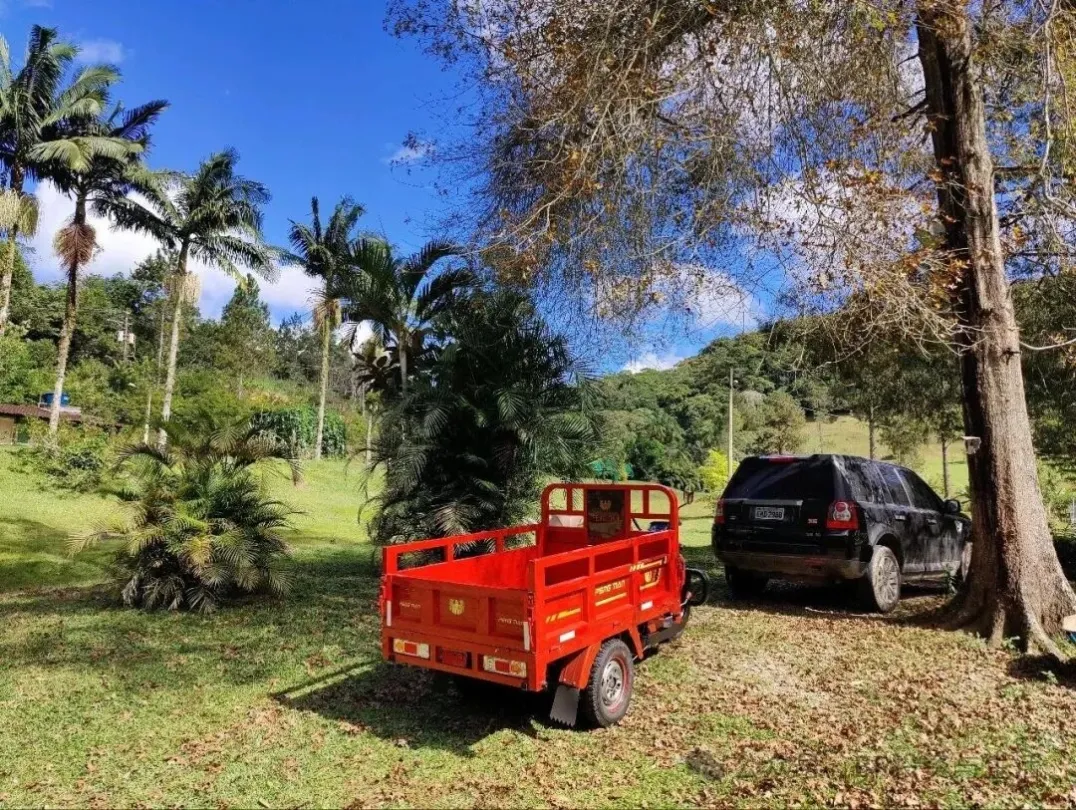
Case Study: Why One Brazilian Farm Imported an Electric Cargo Tricycle from China
A Real-World Agricultural Transport Case Study and Market Opportunity Analysis
Key Takeaways
For readers who want the short version:
✔ A small Brazilian farm spent more than R$20,000 to import an electric cargo tricycle from China.
✔ The vehicle replaced a significant amount of manual transport work for fertilizer, harvested crops, tools, firewood, and farm supplies.
✔ Local alternatives were either oversized (tractors) or expensive (pickup trucks).
✔ The case highlights a growing market gap for compact agricultural utility vehicles across Brazil and other emerging agricultural markets.
✔ For distributors and importers, CKD (Completely Knocked Down) assembly models may significantly reduce landed costs compared with importing fully assembled vehicles.
The Missing Link Between a Wheelbarrow and a Pickup Truck
When people think about farm transportation, they usually imagine tractors, pickup trucks, or utility vehicles.
However, for many small and medium-sized farms, the biggest challenge is not moving tons of cargo across large fields. It is moving small and medium loads efficiently dozens of times every day.
Typical daily tasks include:
- Transporting fertilizer to crop fields
- Moving harvested vegetables to storage areas
- Carrying tree branches and firewood
- Delivering feed to livestock areas
- Transporting tools and maintenance equipment
These jobs are too small for a tractor but too frequent to justify using a pickup truck.
This Brazilian farm discovered that what it really needed was a vehicle that sits between a wheelbarrow and a pickup truck.
The Problem: Tractors Were Too Large, Pickup Trucks Too Expensive
Like many rural properties in Brazil, the farm already had access to traditional agricultural equipment.
The challenge was not a lack of vehicles.
The challenge was finding the right vehicle for everyday transport tasks.
A tractor could move cargo, but starting a large machine simply to transport a few bags of fertilizer or a load of harvested vegetables was often impractical.
A pickup truck could perform the same task, but the acquisition cost, fuel consumption, and maintenance expenses made it difficult to justify for short-distance farm operations.
For many small farms, most transport activities involve moving a few hundred kilograms over relatively short distances rather than hauling heavy loads across large areas.
Typical Challenges
✔ High fuel consumption for short trips
✔ Rising maintenance costs
✔ Limited maneuverability on narrow farm paths
✔ Excessive vehicle size for routine transport tasks
✔ Low utilization of expensive equipment
In Brazil, even a 10-year-old used pickup truck can cost more than R$60,000–70,000.
For many farmers, that investment is difficult to justify when the primary need is moving fertilizer, tools, feed, harvested produce, or firewood around the property.
As a result, much of the work still relied on wheelbarrows, hand carts, and manual labor
Why Not a Pickup Truck, ATV, or Tractor?
When evaluating farm transportation options, most operators already have access to one or more of the following solutions.
However, each comes with trade-offs.
Vehicle Type | Purchase Cost | Payload Capacity | Road Access | Operating Cost | Typical Daily Use |
Wheelbarrow | Very Low | Very Low | Anywhere | Labor Intensive | Small tools, vegetables, light materials |
ATV / Quad Bike | Medium | Low-Medium | Limited (varies by country) | Medium | Patrol, towing small trailers, farm inspection |
Pickup Truck | High | Medium-High | Full Road Access | High | Long-distance transport, general utility |
Tractor | Very High | Very High | Limited | High | Heavy-duty agricultural operations |
Electric Cargo Tricycle | Medium | Medium | Road-Legal Models Available (EEC/COC) | Low | Daily transport, farm logistics, local mobility |
The Missing Middle Ground
The challenge is that most daily farm activities do not require a tractor.
Nor do they justify using a pickup truck.
Tasks such as:
- transporting fertilizer
- moving harvested produce
- carrying tools
- delivering feed
- visiting neighboring properties
- collecting supplies from a nearby village
typically require a vehicle that is:
✔ More capable than a wheelbarrow
✔ More affordable than a pickup truck
✔ More practical than a tractor
✔ More versatile than an ATV
This is where electric cargo tricycles occupy a unique position.
They combine cargo-carrying capability with low operating costs while remaining compact enough for narrow farm roads and daily utility tasks.
Searching for an Alternative: Importing an Electric Cargo Tricycle from China
The farm owner began researching alternatives.
One surprising discovery was that electric cargo tricycles—common throughout Asia—were extremely difficult to find in Brazil.
After exploring multiple options, the owner decided to import an electric cargo tricycle directly from China.
The project involved:
- Vehicle procurement
- Ocean freight
- Customs clearance
- Import duties
- Domestic transportation within Brazil
The complete process took approximately four months from factory shipment to final farm delivery.
Although the timeline was lengthy, the owner believed the productivity benefits would justify the investment.
Import Cost Breakdown: How Much Did It Cost?
One of the most common questions is:
"How much does it cost to import an electric cargo tricycle into Brazil?"
While costs vary depending on freight rates, battery type, customs duties, and exchange rates, this project's approximate cost structure looked like this:
Cost Item | Estimated Cost |
Vehicle Purchase | Included |
Ocean Freight | Included |
Import Duties & Taxes | Significant Portion |
Domestic Transport | Included |
Battery Pack | Included |
Total Landed Cost | Over R$20,000 |
The farm owner noted that import duties represented one of the largest cost components.
The First Surprise: Local Curiosity
Once the vehicle arrived at a warehouse near São Paulo, it still required approximately 80 km of domestic transportation to reach the farm.
The final-mile transportation cost was around R$600.
Interestingly, the transportation company reported that the vehicle attracted attention throughout the journey.
Many people had never seen a compact electric cargo tricycle before and repeatedly asked where it had been purchased.
For most observers, it appeared to be something between a motorcycle and a small utility truck.
The Real Test: Daily Farm Operations
The real value became obvious after the vehicle entered daily service.
Tasks that previously required significant physical effort could now be completed quickly and efficiently.
Typical Applications
✔ Transporting fertilizer
✔ Moving harvested vegetables
✔ Carrying tree branches
✔ Delivering animal feed
✔ Moving tools around the property
The farm included:
- Dirt roads
- Muddy sections
- Small slopes
- Uneven terrain
These conditions are common throughout rural Brazil and many other agricultural regions worldwide.
According to the owner, the biggest advantage was not speed.
It was convenience.
The vehicle was always available, simple to operate, and significantly reduced the physical labor involved in daily transport work.
Cost Comparison: Wheelbarrow vs Pickup Truck vs Electric Cargo Tricycle
One way to understand the value proposition is to compare available transport options.
Solution | Initial Cost | Operating Cost | Labor Efficiency | Suitable Payload |
Wheelbarrow | Low | High Labor Cost | Low | Very Low |
Pickup Truck | High | High Fuel & Maintenance | High | Medium-High |
Electric Cargo Tricycle | Medium | Low | High | Medium |
For many small farms, electric cargo tricycles occupy a practical middle ground.
They provide meaningful carrying capacity without the purchase and operating costs associated with larger vehicles.
Why This Matters Beyond One Brazilian Farm
This case is not unique.
It reflects a broader challenge found across emerging agricultural markets.
Countries such as:
- Brazil
- Colombia
- Peru
- South Africa
- Kenya
- Morocco
- Romania
all face similar issues.
Many farms need a vehicle capable of handling:
- Short-distance transport
- Medium payloads
- Frequent daily use
- Low operating costs
Yet many local markets lack dedicated products designed specifically for these requirements.
Beyond the Farm: When Utility Vehicles Meet Public Roads
One unexpected observation from this case was how often the vehicle was used outside traditional farm work.After a few weeks, it became part of everyday life.
The owner used it to:
- Visit neighboring farms
- Transport small purchases
- Move supplies between properties
- Travel short distances on local roads
For many rural communities, utility transportation does not stop at the farm gate.
This is why road-legal vehicle configurations are increasingly important in markets where agricultural work and daily mobility overlap.
Selected electric cargo tricycle models are available with EEC/COC certification, allowing registration and legal road use in many European markets, subject to local regulations.
Market Insight: A Growing Demand for Compact Agricultural Utility Vehicles
Agricultural operations worldwide are facing three major pressures:
Rising Labor Costs
Manual transport is becoming increasingly expensive.
Demand for Higher Productivity
Farm operators need to move more products with fewer workers.
Increasing Fuel Costs
Operating tractors and pickup trucks for small transport tasks is becoming less economical.
These trends are creating demand for a new category of vehicle:
Compact Electric Utility Vehicles
Including:
- Electric cargo tricycles
- Agricultural e-trikes
- Farm utility vehicles
- Low-speed commercial EVs
This demand is particularly visible in regions where agricultural mechanization is increasing but large equipment remains financially inaccessible for smaller farms.
Could Local Assembly Reduce Costs?
One of the most important observations from this case is that the vehicle itself was not necessarily the largest expense.
Logistics, import duties, and transportation contributed significantly to the final landed cost.
This raises an important question:
Could local assembly reduce costs?
For distributors evaluating the market, CKD (Completely Knocked Down) assembly models may offer several advantages:
✔ Lower freight costs
✔ Reduced import burden
✔ Easier inventory management
✔ Faster local delivery
✔ Greater customization for local customer requirements
This is one reason why CKD electric trike assembly is attracting increasing attention in agricultural and commercial vehicle markets.
For regions with growing demand but limited local supply, assembly-based distribution models may become an important competitive advantage.
Why Import Electric Cargo Tricycles from China?
China currently represents one of the world's largest manufacturing bases for electric cargo tricycles.
For international buyers, key advantages include:
- Mature supply chains
- Wide configuration options
- Proven agricultural applications
- CKD and SKD export capabilities
- Competitive production costs
Many buyers searching for an electric cargo tricycle from China face the same challenge as this Brazilian farm: local availability remains limited, while demand continues to grow.
Final Thoughts
When the vehicle first arrived, neighboring farmers were simply curious.
A few months later, many were asking practical questions:
- How much can it carry?
- How far can it travel?
- How much does it cost to operate?
- Where can they buy one?
That shift—from curiosity to commercial interest—may be the most important takeaway from this case.
This story is not really about one vehicle.
It is about a transportation gap that exists on farms around the world.
For many agricultural operations, there is still a missing link between a wheelbarrow and a pickup truck.
And in this Brazilian case, an electric cargo tricycle turned out to be exactly that missing link.
Frequently Asked Questions (FAQ)
Is an electric cargo tricycle practical for farms in Brazil?
Yes. Electric cargo tricycles are particularly suitable for transporting fertilizer, harvested produce, tools, animal feed, and farm supplies over short distances.
How much does it cost to import an electric cargo tricycle from China to Brazil?
Costs vary depending on freight rates, customs duties, battery specifications, and domestic transportation. In this case, the total landed cost exceeded R$20,000.
Can local distributors reduce costs through CKD assembly?
In many cases, yes. CKD assembly can reduce freight costs, improve supply chain flexibility, and allow greater localization for market requirements.
What farm size benefits most from electric cargo tricycles?
Small to medium-sized farms, orchards, nurseries, vineyards, greenhouses, and mixed agricultural operations often benefit the most.
Are electric cargo tricycles replacing tractors or pickup trucks?
Not necessarily. In most cases, they complement existing equipment by handling short-distance transport tasks that would otherwise be inefficient for larger vehicles.
For more product purchasing guidance, please read the following related articles.
How to Choose the Right Electric Cargo Tricycle for Your Business
Electric Cargo Tricycle Manufacturers in China: 2026 Sourcing Guide
How to Verify an Electric Cargo Tricycle Supplier Before Your First Order
How to Choose High-Quality Electric Tricycles for Internal Logistics Operations
How to Maximize Battery Lifespan in Port & Industrial Electric Tricycles: A Procurement Guide
Reducing TCO in Port Internal Logistics: How Define "High-Quality" Through Operational Certainty
Lead-Acid vs Lithium Battery: Which Is Right for Exporting Electric Tricycles?
How to Choose a Truly "Controllable" Electric Tricycle for last mile delivery
How to Make Your Electric Tricycle Run Longer: 12 Practical Maintenance Tips for Maximum Battery Life
How to Choose the Right Electric Tricycle: Port, City, and Home Applications Explained