
Jun 26, 2026Risk & Compliance
How to Import & Register an L5e Electric Tricycle in Germany? Full EEC & KBA Compliance Guide for 2026
for European B2B buyers — importers, distributors, and fleet operators — who need to understand exactly what compliance documentation to demand from their overseas supplier before the container ship
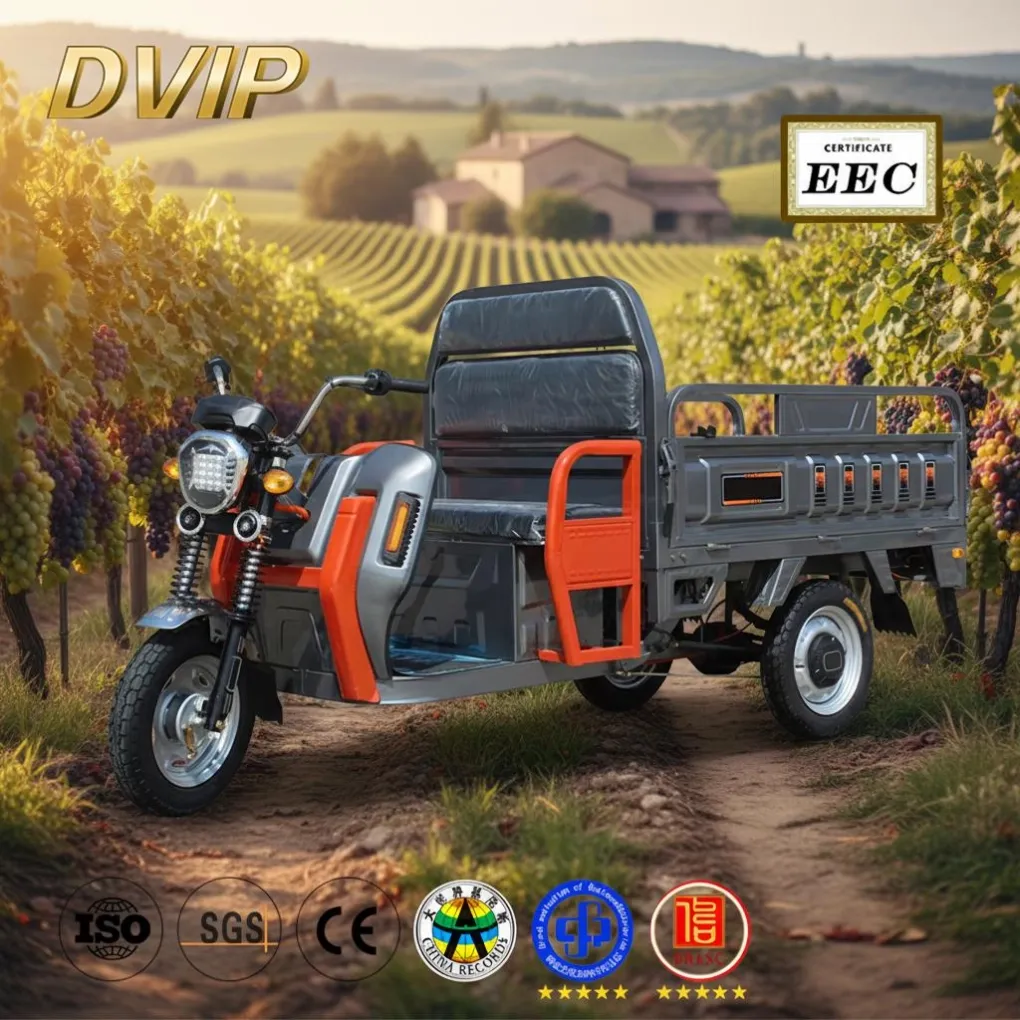
How to Import & Register an L5e Electric Tricycle in Germany? Full EEC & KBA Compliance Guide for 2026
L5e Elektro-Lastendreirad Import Deutschland 2026: Vollständiger EEC & KBA Compliance Leitfaden
Introduction: The German Market is Ready – But "Clearing Customs" Is Not the Same as "Road-Legal"
The German urban logistics, last-mile delivery, and craft service sectors are moving fast toward electrification. For German importers, distributors, and fleet operators, compact electric cargo tricycles (L5e category) represent a massive market opportunity.
However, many European buyers discover a painful truth only after their container has arrived: getting a vehicle through German customs (Zoll) is relatively easy — getting it through TÜV and registered for the road is where the real challenge begins.
Customs authorities do not check whether your vehicle has an EU type-approval (EEC) certificate. They check your commercial invoice, bill of lading, certificate of origin, and that the battery has UN38.3 (for transport safety). Your container will clear. Your goods will arrive at your warehouse.
The problem starts when you call TÜV for an inspection appointment.
A missing ECE-R100 battery certificate, an incomplete Technical Specification Sheet, or a non-compliant VIN stamping can mean your vehicle is physically in Germany but legally unable to leave your warehouse. Your capital is frozen. Your customers are waiting. And retrofitting compliance in Germany can cost EUR 5,000–15,000 per vehicle.
This guide is written specifically for German and European B2B buyers — importers, distributors, and fleet operators — who need to understand exactly what compliance documentation to demand from their overseas supplier before the container ships, so that TÜV registration in Germany proceeds without delay.
Terminology Note: In this guide, "EEC certification" refers to the full EU Whole Vehicle Type Approval (EUWVTA) — a certification issued under the European framework that allows direct vehicle registration using a Certificate of Conformity (COC). ECE regulations (e.g., ECE R100 for battery safety) are the underlying technical standards that form part of the EEC certification, as well as the basis for individual vehicle inspections under Einzelgenehmigung.
Part 1: Fleet & Business Viability – Why Choose L5e?
1.1 The L5e Advantage for Commercial Fleets
Under EU Regulation (EU) No. 168/2013, an L5e-B vehicle is a three-wheeled vehicle designed primarily for goods transport, with a maximum net power ≤ 15 kW, and an unladen mass ≤ 1,000 kg (excluding batteries).
For logistics managers and distributors, this category fills a specific gap in the market: it is larger and more stable than a cargo e-bike (L1e/L2e), but more agile and less regulated than a light commercial van (N1).
A typical L5e cargo tricycle offers:
Feature | Typical Range | Why It Matters |
Payload capacity | 200 kg – 700 kg | Enough for daily parcel delivery routes or craft service equipment |
Top speed | 45 – 50 km/h | Legally usable on standard roads, no highway required |
Battery capacity | 2 – 5 kWh (depending on range needs) | Sufficient for 60–120 km of urban driving per charge |
Cabin options | Open platform or enclosed cabin | Enclosed cabin extends usability in German weather conditions |
For a delivery fleet operating in cities like Berlin, Hamburg, or Munich — where CO₂-free zones are expanding and diesel vans face increasing restrictions — the L5e cargo trike offers a practical, immediately available alternative.
1.2 Driver License Requirements in Germany (Class AM vs. Class B)
One of the strongest selling points for your B2B customers is the low barrier to entry for drivers:
- Class AM (minimum age 16): Fully sufficient for L5e tricycles with a net power ≤ 15 kW. This dramatically lowers hiring costs for delivery companies, as drivers as young as 16 can legally operate these vehicles.
- Class B (passenger car): Anyone who obtained their German Class B license before January 19, 2013, is automatically authorized to drive any L5e vehicle. Drivers who obtained their Class B license after this date may also drive L5e tricycles, provided they meet the applicable conditions.
⚠️ Note on B196: Unlike two-wheeled 125cc scooters, the German B196 extension is not required for standard L5e tricycles under 15 kW, as they fall under Class AM or existing Class B authorisation rules.
Part 2: Sourcing Strategy – Two Legal Paths for Importing L5e Vehicles into Germany
When negotiating with overseas manufacturers, you must choose between two distinct import pathways depending on your business volume, timeline, and budget. Both are legally valid in Germany, and each has its own advantages and trade-offs.
Path A: EU Whole Vehicle Type Approval (EUWVTA) – For High-Volume Importers
If you are an established distributor planning to sell 500+ units per year across multiple models, the most efficient path is to source from manufacturers who already hold a valid EUWVTA certificate. This means the vehicle model itself has been tested and approved by an EU Technical Service (e.g., TÜV SÜD, DEKRA, IDIADA) as meeting all applicable ECE regulations.
Your advantage: Each vehicle comes with a factory-issued Certificate of Conformity (COC) . Customs clearance and local German registration (Zulassung) are straightforward — usually completed within a few days. No individual TÜV inspection is required per vehicle.
Your limitation: Your choice of suppliers is narrower, and vehicles with EUWVTA typically carry a slightly higher factory price. Additionally, the certification is configuration-locked — the battery model, motor power, frame dimensions, and tyre specifications are all fixed in the certificate.
Understanding Certificate Access: Why Factories Do Not Release Full EUWVTA Documentation Before Order Confirmation
As a buyer, you may ask your supplier: "Can you provide a copy of your EUWVTA certificate so I can verify it?"
The honest answer from reputable manufacturers is: We will confirm our Type-Approval number and the issuing Technical Service, but we will not release the full certificate package until an order is confirmed and the configuration is locked.
This is not a sign of an unreliable supplier. It is standard industry practice, and there are three legitimate commercial reasons behind it:
1. The certificate is a significant investment and a competitive moat. A full EUWVTA certification costs between EUR 20,000 and 50,000 per vehicle model. It includes detailed technical parameters, test reports, and structural drawings. If a factory releases the complete certificate package to a prospect who does not place an order, that prospect could:
- Take the technical parameters to a cheaper manufacturer and request a "copycat" vehicle
- Transfer the certificate to another factory for OEM production, bypassing the original manufacturer
- Use the certificate as a Referenz-Gutachten (reference assessment) at a German TÜV station to fast-track a competing vehicle's approval
2. The certificate is configuration-locked by law. An EUWVTA certificate is issued for a specific configuration — the battery model, motor power rating, frame dimensions, and tyre size are all fixed. If a customer reviews the certificate and then requests a different battery or motor, the original certificate becomes invalid for that modified vehicle. Factories fear this sequence: provide certificate → customer requests changes → certificate no longer matches → customer accuses the factory of providing "incorrect documentation."
3. Certificate misuse and liability risks. Some European buyers practise "certificate shopping" — obtaining a certificate from Factory A, purchasing cheaper vehicles from Factory B, and pairing Factory A's certificate with Factory B's vehicles for registration. If a safety incident occurs, Factory A (the certificate holder) bears legal liability under EU product liability law, even though they did not manufacture the vehicle in question.
What a serious factory will provide for verification:
- ✅ Type-Approval Number — you can verify this directly with the issuing Technical Service (e.g., TÜV SÜD, DEKRA)
- ✅ Issuing Technical Service name and contact
- ✅ Certificate validity status (active, suspended, or expired)
Example — Type-Approval Number format: e.g., e1168/201312345*00 (the "e1" refers to Germany as the issuing country; the number can be verified with the issuing body)
✅ Our factory's Type-Approval Number: Available upon request after order confirmation and configuration lock. We are happy to provide the issuing Technical Service details for your verification at any time.
Path B: Individual Vehicle Approval (Einzelgenehmigung) – For Test Batches, Small Volumes & Custom Builds
Is this path legal in Germany and Europe? Yes — absolutely.
Individual Vehicle Approval (Einzelgenehmigung, also known as Einzelabnahme) is explicitly recognised under German StVZO (Road Traffic Licensing Regulations) and EU Regulation 168/2013 as a legitimate alternative to full type approval. Thousands of vehicles are registered in Germany through this path every year — from imported US classic cars to specialised commercial vehicles and prototype EVs.
This is not a loophole. It is a standard regulatory pathway.
Who should use this path?
- Importers testing the market — You want to import 5–20 units first to validate demand before committing to a full container order
- Buyers requiring custom configurations — You need a specific battery size, cargo box design, or speed configuration that does not match an existing EUWVTA certificate
- Fleet operators with specialised use cases — Your vehicles need modifications (e.g., custom racking, refrigeration unit, special signage) that would not be covered by a standard COC
This path is particularly well-suited for customised vehicles. Because Einzelgenehmigung inspects each vehicle individually, modifications and special configurations are evaluated on their own merit — as long as the key safety components (battery, brakes, lighting, speed limiter) carry valid ECE component certificates and the vehicle meets the applicable technical requirements.
The process:
- You bring the vehicle to a local TÜV, DEKRA, or GTÜ station
- An inspector performs a physical inspection of: safety systems, emissions, lighting, brakes, speed limiter verification, VIN stamping, and overall roadworthiness
- If the vehicle meets all requirements, you receive a Prüfbericht (Inspection Report)
- You take the Prüfbericht to the Kfz-Zulassungsbehörde (Vehicle Registration Office) together with your insurance eVB number and other required documents
- You receive your German license plates
Your cost: Expect EUR 1,200–2,800 per vehicle for the TÜV inspection, administrative fees, and any required technical translations or minor adjustments.
Your responsibility: You must ensure the manufacturer provides:
- ✅ A complete Technical Specification Sheet (TSS) in English and German
- ✅ Valid ECE component certificates for: battery (R100), EMC (R10), brakes, lighting, tyres, safety glass (if applicable)
- ✅ A correctly stamped 17-digit VIN following ISO 3779 standard
- ✅ A registered WMI (World Manufacturer Identifier)
�� Buyer's tip: The more complete the factory's documentation package, the smoother and cheaper your TÜV inspection. The single most common reason for Einzelgenehmigung failure is a missing or incorrect ECE-R100 battery certificate.
Path A vs. Path B: Comparison Table
Aspect | Path A: EUWVTA (Full Type Approval) | Path B: Einzelgenehmigung (Individual Approval) |
Best suited for | High-volume importers (500+ units/year), established distributors seeking stable delivery | Market testing (5–20 units), custom configurations, prototype verification during new model development |
Registration process in Germany | ✅ Plug & play — use factory COC directly at Zulassungsstelle. No physical TÜV inspection needed. A distributor can complete the paperwork in 10 minutes per vehicle | ⚠️ Each vehicle must be individually inspected — book an appointment with TÜV/DEKRA (current waiting time in Germany: 2–6 weeks), deliver the vehicle to the station, half to full day of inspection, obtain Prüfbericht, then register |
Time to first registered vehicle (from port arrival) | ✅ 1–2 weeks — Customs clearance → COC → Zulassungsstelle → license plates. Standardised process, no surprises | ⚠️ 4–12 weeks or longer — Customs clearance → book TÜV appointment (queue) → inspection → if documents have issues, corrections or rework needed → re-inspection → Prüfbericht → registration. Any document issue can double the timeline |
Batch registration efficiency (50 units) | ✅ Very fast — 50 units share the same EUWVTA certificate. Can be registered in bulk within a few days | ❌ Extremely slow — every single unit must go through the TÜV inspection process individually. Even with complete documents, vehicles must queue in batches. Takes weeks or even months |
Factory price difference | Slightly higher than non-EEC models (approx. 5–15% premium) due to certification cost amortisation. For volume buyers, the price gap is negligible | Factory price is usually lower, but you must absorb the TÜV inspection cost (€1,200–2,800/unit) plus hidden costs for document translation, corrections, and modifications |
Total landed cost (ready for road in Germany, all fees included) | ✅ Controllable and predictable — Vehicle price + freight + duty + minor registration fees. No unexpected expenses | ⚠️ High uncertainty — Vehicle price + freight + duty + TÜV inspection fee + potential correction/modification costs + document translation/notarisation fees. Total cost may exceed that of an EEC-certified vehicle |
Document risk | ✅ Very low — Factory has passed complete certification. All documents have been reviewed by an EU Technical Service. No risk of "documents not matching the vehicle" | ❌ High — You must personally verify every document from the factory: Does the battery certificate match the actual battery installed? Does the lighting certificate cover this model? Is the VIN stamping compliant? Any single document error or omission means the TÜV inspection fails, requiring the factory to reissue — time cost is completely unpredictable |
Capital tie-up risk | ✅ Low — Vehicles arrive, get registered quickly, delivered quickly, and cash flows back quickly | ❌ High — Vehicles arrive but get stuck in the TÜV inspection queue for weeks or months. Capital is frozen in inventory, and you cannot deliver to customers |
Configuration flexibility | ❌ Configuration is locked within the certified scope. If changes are needed (e.g., different battery, modified cargo box), a new certification or Einzelgenehmigung is required | ✅ High — customisation and small-batch modifications are possible. Each vehicle is assessed individually |
Importer expertise required | ✅ Low — You don't need to understand German regulatory details. Factory provides the COC, local registration follows standard procedures | ⚠️ High — You need to understand German StVZO requirements, the ECE regulatory framework, and TÜV inspection standards in order to correctly review factory documentation. Otherwise, mistakes are very easy to make |
Suitable as a first step for new importers? | ✅ Yes, provided you find a reliable EEC-certified factory. Higher upfront investment, but the process is standardised and risks are controllable | ⚠️ It can work as a first step, but with significantly higher risk. We strongly recommend starting with 1–2 test units to verify the factory's documentation capabilities before scaling up. Do not send a full container under Einzelgenehmigung as your first order |
Part 3: Critical Documentation Checklist – What You Need for a Smooth Registration
Whether you choose Path A (EUWVTA) or Path B (Einzelgenehmigung), the quality and completeness of your documentation will determine how fast — and how cheaply — your vehicles get registered in Germany. Missing or incorrect documents are the single most common cause of delays, failed TÜV inspections, and unexpected costs.
This section gives you a clear, itemised checklist so you know exactly what to request from your factory — and what to verify before the vehicle leaves the port.
3.1 Documents Required for Both Paths
These are the foundational documents you will need regardless of which registration path you choose. If any of these are missing, registration cannot proceed.
Document | Purpose | Who Provides It | Notes |
Commercial Invoice | Proof of purchase value for customs clearance | Factory / Seller | Must include vehicle model, VIN, HS code (8703.80 for electric trikes), and declared value |
Packing List | Details of cargo for customs | Factory / Seller | Must match the invoice |
Bill of Lading (B/L) or Air Waybill | Proof of shipment | Shipping line / Forwarder | Original or telex release |
Certificate of Origin | Required for customs duty calculation (may reduce duty under EU free trade agreements) | Factory / Chamber of Commerce | E.g., Form A for GSP countries |
Insurance Confirmation (eVB Number) | Required for vehicle registration in Germany | German insurance provider | You need an eVB number (electronic insurance confirmation) before you can apply for plates |
Personal ID / Passport (for the applicant) | Identity verification at Zulassungsstelle | Importer / Buyer | For company registrations: trade register extract (Handelsregisterauszug) and power of attorney (Vollmacht) |
3.2 Path A (EUWVTA) – Additional Documents
If you are importing vehicles with full EU type approval, these documents replace the need for individual TÜV inspection:
Document | Purpose | Who Provides It | Notes |
Certificate of Conformity (COC) | The single most important document. Proves the vehicle meets all EU type approval requirements. Allows direct registration at Zulassungsstelle without TÜV inspection | Factory (mandatory) | Must be an original factory-issued COC (not a photocopy). Check that the COC matches the specific VIN of each vehicle |
EUWVTA Certificate | The underlying type approval certificate for the vehicle model | Factory (upon order confirmation) | You do not need this for registration (the COC is sufficient), but you should verify its validity with the issuing Technical Service |
Type-Approval Number | Used by customs and authorities to verify the vehicle's approval status | Factory | Format example: e1168/201312345*00. Share this number with your customs broker for faster clearance |
⚠️ Critical check: The VIN on the COC must match the VIN stamped on the vehicle frame. If they do not match — even by one character — the vehicle cannot be registered. Always verify this before the vehicle leaves the factory.
3.3 Path B (Einzelgenehmigung) – Additional Documents
If you are registering vehicles through individual approval, your documentation package is more extensive. Each document will be reviewed by the TÜV inspector. Any error or omission can stop the process.
Document | Purpose | Who Provides It | Notes |
Technical Specification Sheet (TSS) | A complete technical data sheet in English and German describing the vehicle's dimensions, weight, motor power, battery specifications, top speed, tyre size, etc. | Factory | This must be translated into German. TÜV inspectors will use this as the reference document for the inspection |
ECE-R100 Certificate (Battery Safety) | Proves the battery system meets EU safety requirements for electric vehicle traction batteries | Factory (battery supplier) | This is the most common point of failure. The certificate must cover the specific battery model installed in the vehicle. Check that the battery model number on the certificate matches the physical battery label |
ECE-R10 Certificate (EMC — Electromagnetic Compatibility) | Proves the vehicle does not emit harmful electromagnetic interference and is immune to external EM fields | Factory | Required for all electric vehicles |
ECE-R3 Certificate (Lighting) | Proves that all lighting devices (headlights, taillights, turn signals, reflectors) meet EU standards | Factory (lighting component supplier) | Check that the certificate covers all light models installed on the vehicle |
ECE-R78 Certificate (Brakes) | Proves the braking system meets EU standards for L-category vehicles | Factory | For L5e vehicles, this typically covers service brake and parking brake performance |
ECE-R75 Certificate (Tyres) | Proves the tyres meet EU standards | Factory (tyre supplier) | Check that the tyre size and speed rating on the certificate match the tyres fitted |
ECE-R43 Certificate (Safety Glass, if applicable) | Proves that any glass used (windscreen, windows) meets EU safety standards | Factory (glass supplier) | Required if the vehicle has an enclosed cabin |
VIN Documentation | Proof that the 17-digit VIN has been correctly stamped on the vehicle frame following ISO 3779 standard | Factory | The VIN must be clearly visible and permanently stamped. TÜV will verify this physically |
WMI Certificate (World Manufacturer Identifier) | Proves that the factory has a registered WMI with the relevant authority | Factory | Without a registered WMI, the VIN is not valid in the EU system |
Speed Limiter Documentation | Proof that the vehicle's top speed has been limited to the legal maximum (typically 45 km/h or 50 km/h for L5e) | Factory | TÜV will verify the speed limiter during the physical inspection |
Wiring Diagram (Electrical Schematic) | May be requested by TÜV for complex electrical systems | Factory | Not always required, but having it available can speed up the inspection |
�� Important: For each ECE component certificate, the certificate must be valid at the time of inspection — not expired. Also, the model number on the certificate must exactly match the model number physically labelled on the component.
3.4 Common Document Pitfalls — And How to Avoid Them
Based on real-world experience with Einzelgenehmigung inspections in Germany, these are the most frequent problems importers face:
Problem | Consequence | How to Prevent It |
Battery certificate (R100) does not match the actual battery installed | TÜV refuses inspection. Vehicle cannot be registered. Factory must issue a new certificate or replace the battery | Before shipment, photograph the battery label and send it to your factory to confirm the certificate covers this exact model |
COC (for Path A) has a VIN mismatch | Zulassungsstelle refuses registration. Vehicle technically cannot ever be registered under that COC | Verify the VIN on the COC against the vehicle frame VIN before loading the container |
TSS is only in English, not German | TÜV may reject it or charge extra for translation | Request a German-language TSS from the factory, or have a certified translator prepare it before the TÜV appointment |
ECE certificate is expired | TÜV will not accept it | Check the validity date on every certificate before the vehicle arrives |
WMI is not registered or is invalid | VIN cannot be accepted in the German system | Verify the factory's WMI through the official database before ordering |
Speed limiter is not set or is removed | Vehicle fails TÜV inspection. May require workshop modification at your cost | Test the speed limiter before shipping and confirm it is locked and sealed |
3.5 Factory Checklist: What We Provide
As a factory with full EUWVTA certification, we provide a documentation package designed to make your import process as smooth as possible.
- ✅ Original Certificate of Conformity (COC) — one per vehicle, VIN-matched
- ✅ Type-Approval Number and issuing Technical Service information
- ✅ Commercial invoice, packing list, certificate of origin
- ✅ Technical support for customs clearance
❗ Our commitment: We will never ship a vehicle without confirming that every document in the package is accurate and matches the vehicle. If you are a first-time importer, we will walk you through the document checklist step by step.
Part 4: Customs Clearance & Logistics – Getting Your Vehicles from China to Germany
This section covers the practical steps of physically moving your vehicles from the factory in China to your warehouse in Germany — and clearing them through customs legally and efficiently. Many first-time importers underestimate the complexity of this stage, which can lead to costly delays, storage fees, or even confiscation of goods.
4.1 HS Code Classification – Industry Practice
Every product imported into the EU must be declared under a Harmonised System (HS) code. For electric L5e three-wheeled vehicles, the industry-standard practice is to use the following HS code:
HS Code | Description | Applicability | Duty Rate |
8711.60 | Motorcycles (including mopeds) with electric motor | L5e electric three-wheelers (industry-standard classification) | 6% |
�� Industry Note: L5e electric three-wheelers fall under the L-category (motorcycles / three-wheelers) in the EU regulatory framework, which aligns with the HS 8711 classification logic. The industry-standard practice is to declare under 8711.60 (electric motorcycles), which carries a 6% duty rate — lower than the 8703/8704 series (10%), reducing import costs. This practice has been widely validated in the industry and is well accepted by customs authorities.
⚠️ Reminder: Although 8711.60 is the industry standard, we recommend confirming with your customs broker that this code is appropriate for your specific vehicle model based on German customs practice. If you require legal certainty, you can apply for a Binding Tariff Information (BTI) from German customs — this takes 3–4 months but guarantees the classification.
4.2 Import Duties & Taxes – What You Will Pay
When importing into Germany, you will pay two main charges:
1. Customs Duty (Zoll)
- Rate: 6% (based on HS code 8711.60)
- Calculated on: CIF value (Cost + Insurance + Freight) — i.e., the total value of the goods including shipping and insurance to the EU border
- Example: If your CIF value per vehicle is €1,000 and the duty rate is 6%, customs duty = €60 per vehicle
2. Import VAT (Einfuhrumsatzsteuer)
- Rate: 19% (standard German VAT rate)
- Calculated on: CIF value + customs duty
- Example: CIF €1,000 + duty €60 = €1,060 × 19% = €201.40 VAT
- Important: This VAT is reclaimable if you are a VAT-registered business in Germany. You claim it back through your regular VAT return (Umsatzsteuer-Voranmeldung). If you are not VAT-registered in Germany, this is a final cost.
3. Other potential charges (rare but possible):
- Anti-dumping duties — Currently not applicable to Chinese-made electric L5e vehicles, but this situation can change. Monitor EU trade policy updates.
- Customs clearance fees — Charged by your customs broker or freight forwarder (typically €100–300 per customs declaration)
Cost Component | Calculation | Typical Cost per Vehicle (Example: CIF €1,000) |
CIF Value | Purchase price + freight + insurance to German port | €1,000 |
Customs Duty (6%) | 6% × CIF value | €60 |
Import VAT (19%) | 19% × (CIF + duty) | €201.40 |
Customs Broker Fee | One-time per declaration | €50–150 (spread across all vehicles on the same declaration) |
Total additional cost per vehicle | | €261.40 + broker fee allocation |
�� Note: If you are importing through Path B (Einzelgenehmigung) and your vehicles will not be sold immediately, you can apply for customs warehousing (Zolllager) or temporary admission (vorübergehende Verwendung) to defer payment of duties and VAT until the vehicles are released for free circulation. Ask your customs broker about this option — it can significantly improve your cash flow.
4.3 Required Documents for Customs Clearance
Your customs broker will need the following documents to clear your shipment:
Document | Required? | Notes |
Commercial Invoice | ✅ Mandatory | Must include: seller and buyer details, vehicle model, VIN for each vehicle, HS code (8711.60), declared value per unit, total invoice value, incoterms (e.g., FOB, CIF), country of origin |
Packing List | ✅ Mandatory | Must include: number of packages, weight per package, dimensions, contents of each package, VIN list matching each package |
Bill of Lading (B/L) or Air Waybill | ✅ Mandatory | Original or telex release. Make sure the consignee name matches your company registration |
Certificate of Origin | ✅ Recommended | May reduce or eliminate duty under EU free trade agreements (e.g., GSP for certain countries). Check if China qualifies — current status may vary. If not applicable, a supplier's declaration of origin may suffice |
Import Declaration (Zollanmeldung) | ✅ Filed by broker | Your customs broker will file this electronically through the ATLAS system |
EEC Certificate / COC (for Path A) | ✅ Good to have on hand | Not always needed for customs clearance (customs does not routinely check COCs), but good to have available in case customs asks for proof of vehicle type |
Power of Attorney (Vollmacht) | ✅ Required for broker | Your customs broker needs written authorisation to act on your behalf |
4.4 Logistics Options – How to Ship Your Vehicles
Option 1: Full Container Load (FCL) – Best for Volume
Aspect | Details |
Container type | 40ft HC (High Cube) — can fit 58–60 L5e vehicles depending on model size |
Loading port | Typically Shanghai, Ningbo, Shenzhen, or Guangzhou |
Destination port | Hamburg (preferred), Bremerhaven, Rotterdam (then truck to Germany) |
Transit time | 30–40 days (China to Hamburg by sea) |
Cost per container | €3,000–€6,000 depending on season and route |
Cost per vehicle (if 60 vehicles) | €50–€100 per vehicle |
Best for | Established distributors placing regular orders of 58–60+ units |
Option 2: Less than Container Load (LCL) – Best for Test Batches
Aspect | Details |
Shipping method | Your goods share a container with other cargo |
Loading port | Same as FCL |
Destination port | Same as FCL |
Transit time | 35–50 days (slightly longer due to consolidation/deconsolidation) |
Cost per m³ | €80–€200 per cubic metre |
Typical cost for 5–10 vehicles | €500–€1,500 |
Best for | First-time importers testing the market with 5–20 units |
Option 3: Air Freight – Only for Urgent Samples
Aspect | Details |
Cost | 10–15× more expensive than sea freight |
Transit time | 5–10 days |
Best for | Single prototype vehicles, urgent replacement parts, time-critical samples |
�� Tip: For first-time importers, we recommend starting with LCL (5–10 units) through Path B (Einzelgenehmigung) to validate your market. Once you confirm demand and have your documentation process refined, switch to FCL (58–60 units) through Path A (EEC) for maximum cost efficiency.
4.5 Customs Clearance Process – Step by Step
Here is what happens from the moment your container arrives at the German port:
Step 1: Arrival at German Port (e.g., Hamburg)
- Container is unloaded from the vessel
- Terminal operator records the container in their system
- Free storage period typically 3–7 days — after that, demurrage charges apply
Step 2: Customs Declaration Filed
- Your customs broker files an import declaration (Zollanmeldung) electronically through the German ATLAS system
- Documents required: invoice, packing list, bill of lading, certificate of origin (filed electronically as attachments)
- Declaration is processed by Hauptzollamt (Main Customs Office) responsible for the port
Step 3: Customs Assessment
- Customs reviews the declaration and may:
- ✅ Release immediately (green channel) — goods are cleared without further checks
- �� Request documents (yellow channel) — customs asks for supporting documents (invoice, certificate of origin) to verify the declaration
- �� Inspect physically (red channel) — customs orders a physical inspection of the container. This is rare for electric vehicles, but can happen if the HS code is suspicious or the declared value seems too low
Step 4: Payment of Duties & VAT
- Once customs releases the goods, you (or your broker on your behalf) must pay:
- Customs duty: CIF value × 6% (e.g., €1,000 × 6% = €60)
- Import VAT: (CIF + duty) × 19% (e.g., €1,060 × 19% = €201.40)
- Payment is typically made via direct debit (SEPA) from your German bank account, or your broker can pay on your behalf and invoice you
Step 5: Container Pickup & Trucking
- After customs clearance, the container is released for pickup
- You arrange a trucking company to:
- Pick up the container from the port
- Deliver it to your warehouse or storage facility
- If you have only a partial load (LCL), the goods are deconsolidated at a warehouse and delivered on a pallet basis
Step 6: Unload & Prepare for Registration
- Vehicles are unloaded from the container
- For Path A (EEC): You can proceed directly to Zulassungsstelle registration
- For Path B (Einzelgenehmigung): Vehicles are staged for TÜV inspection appointments
4.6 Common Customs Issues – And How to Avoid Them
Issue | Consequence | Prevention |
Declared value too low | Customs may hold the shipment, request additional documentation, or impose penalties for under-valuation | Declare actual purchase price on the invoice. Do not under-declare to save duty — German customs has access to Chinese export data and can cross-check |
Incorrect HS code | Wrong duty rate applied, customs audit risk, potential penalties | Confirm HS code before shipping with your customs broker (should be 8711.60). If unsure, apply for a Binding Tariff Information (BTI) from German customs — it takes 3–4 months but gives you legal certainty |
Missing certificate of origin | Cannot claim preferential duty rate, may pay full duty | Request the certificate of origin at the time of ordering, not after shipment |
Incoterms confusion | Disagreement on who pays for shipping, insurance, or customs clearance | Agree on a clear Incoterm with your factory (CIF = seller pays freight and insurance to destination port; FOB = seller delivers to port of loading, buyer arranges the rest). We recommend CIF for first-time importers — less complexity |
VAT not reclaimable | 19% becomes a permanent cost if you are not VAT-registered in Germany | Register for VAT in Germany before your first import. Work with a German tax advisor (Steuerberater) to set this up |
4.7 Recommended Logistics Checklist for First-Time Importers
Step | Action | Who Does It |
1 | Confirm HS code (8711.60) with customs broker | Importer + Broker |
2 | Choose Incoterm (recommended: CIF) | Importer + Factory |
3 | Book container or LCL space | Importer / Forwarder |
4 | Request all export documents from factory (invoice, packing list, COC/certificates) | Factory |
5 | Verify VINs on documents match vehicle VINs | Importer (before loading) |
6 | Ship goods | Factory / Forwarder |
7 | Appoint German customs broker | Importer |
8 | Provide power of attorney (Vollmacht) to broker | Importer |
9 | Broker files import declaration upon vessel arrival | Broker |
10 | Pay duties (6%) and VAT (19%) | Importer |
11 | Arrange trucking from port to warehouse | Importer |
12 | Unload and inspect vehicles | Importer |
4.8 Duty Cost Comparison Table
For your budgeting convenience, here is a duty cost calculation table based on CIF = €1,000 and HS code 8711.60:
CIF Value per Vehicle | Customs Duty (6%) | Dutiable Value (CIF + Duty) | Import VAT (19%) | Total Tax Cost |
€1,000 | €60 | €1,060 | €201.40 | €261.40 |
€1,500 | €90 | €1,590 | €302.10 | €392.10 |
€2,000 | €120 | €2,120 | €402.80 | €522.80 |
€2,500 | €150 | €2,650 | €503.50 | €653.50 |
✅ At CIF €1,000 per vehicle: Total duty + VAT = €261.40 per vehicle. For a full container of 60 vehicles, total tax cost = €15,684 (excluding broker fees).
✅ Comparison with 8703/8704 series (10% duty): Using 8711.60 (6% duty) saves approximately 4% in duty cost per vehicle. At CIF €1,000, that is €40 savings per vehicle, or €2,400 per full container (60 vehicles) .
Part 5: How to Choose the Right L5e Model for Your Target Market
After assessing the market opportunity, understanding the regulatory framework, and preparing for the import process, the next logical question is: Which L5e electric tricycle model has the most sales potential in your target market?
Choosing the right model is one of the most critical decisions you will make. The right model will sell itself to the right end-users; the wrong model, no matter how good the price or supply chain, will sit in your warehouse. This section provides a practical framework for selecting models based on actual end-user scenarios.
5.1 Start with the End-User
L5e electric tricycles are not one-size-fits-all products. The needs of a private household are fundamentally different from those of a logistics company. Therefore, the first step in model selection is not to look at what suppliers offer, but to ask: Who will ultimately buy and use this vehicle?
Based on current European market data, L5e end-users can be grouped into the following categories:
User Type | Typical Scenario | Core Needs |
Private individuals / Families | Daily shopping, short trips, school runs, carrying household items | One vehicle for multiple uses, flexible passenger/cargo mode, easy parking, simple operation |
Small businesses / Self-employed | Urban small-item delivery, mobile vending, tool transport | Adequate cargo capacity, low operating cost, durable and reliable |
Farmers / Agricultural users | Field transport, farm supply, site shuttling | Good off-road capability, high load capacity, weather resistance |
Logistics / Delivery companies | Last-mile parcel delivery, fresh food dilivery | Standardization, large cargo volume, customizable branding, reliable range |
Municipal / Public services | Street cleaning, park patrol, facility maintenance | Durability, easy maintenance, ability to add specialized equipment |
In the current European market, private/family users and commercial delivery users represent the two fastest-growing segments. The following sections focus on these two scenarios and their corresponding model selection logic.
5.2 Scenario 1: Targeting Private & Family Users
Market Context
In recent years, European consumers have shown a rapidly growing interest in electric tricycles. More and more families are using them as a replacement for a second car for daily short-distance trips: going to the supermarket, picking up children, carrying sports equipment, or hauling garden supplies. These users do not need a dedicated "cargo truck" or a dedicated "passenger car." They need one vehicle that can handle multiple daily tasks.
Typical Pain Points for This User Group
- They already own a car, but using it for small errands is inconvenient (parking, fuel cost, space)
- A bicycle's cargo capacity is too limited for larger items
- They don't want to buy multiple specialized vehicles (waste of money and space)
Suitable Model Characteristics
A model targeting private and family users should have the following features:
- Flexible passenger/cargo mode: Should be able to carry people for daily trips and quickly convert to cargo mode for shopping or larger items
- Load capacity of 200–500 kg: Sufficient for grocery runs, carrying small items, and everyday household needs
- Compact dimensions: Easy to park in standard parking spots, bicycle lanes, or even push into a courtyard or garage
- Simple, intuitive control: No special training required, similar to riding a bicycle
Recommended Model Reference
Among models that already have EEC certification, the following options have proven suitable for the family user segment:
1.1M models are compact and ideal for users with strict space limitations—for example, families living in apartments with only a small yard or garage. While their load capacity and space are relatively limited, they are sufficient for daily supermarket trips and short-distance commuting.
1.2M Folding models represent a noteworthy niche for the private user market. Their key advantage is flexibility: the seat can be folded down to quickly switch between passenger and cargo modes. For a supermarket run, fold down the seat to get a sizable cargo area. For a family outing, restore the seat to carry passengers. This "one vehicle for multiple uses" capability directly addresses the core needs of family users. The folding design also makes it easier to store in tight spaces.
1.5M models offer larger cargo space and higher load capacity. They are suitable for families with greater hauling needs, or for individual users who also require light commercial capability.
For detailed specifications and ECC certification status of these models, please refer to the product pages: [1.1M Model] · [1.2M Folding Model] · [1.5M Model]
5.3 Scenario 2: Targeting Commercial Delivery & Logistics Users
Market Context
Last-mile delivery is the traditional core market for L5e electric tricycles. As major European cities tighten restrictions on fossil-fuel vehicles entering city centers, electric tricycles are becoming the preferred tool for parcel delivery, fresh food dilivery and other industries. This market is characterized by stable demand, high repeat purchase rates, and high requirements for standardization and reliability.
Typical Pain Points for This User Group
- Vehicles operate daily in urban environments, requiring frequent stops and loading/unloading
- Deliveries happen in all weather conditions; the vehicle needs to cope with rain, snow, and sun
- High-frequency use demands outstanding durability and easy maintenance
- Corporate clients typically require uniform branding (custom paint/livery)
Suitable Model Characteristics
For commercial delivery users, the core needs are, in order of priority: Cargo space > Durability > All-weather capability > Customizability
- Cargo space first: Must have sufficient cargo volume to carry parcels, food boxes, grocery crates, etc.
- Configurable body options: Depending on the operation scenario and season, users need different cargo box or roof options
- Easy maintenance: Spare parts must be readily available and easy to replace, minimizing vehicle downtime
- Customizable livery: Business customers need the ability to print their brand logo on the vehicle body
Recommended Model Reference
In the commercial delivery scenario, the 1.6M model is a market-proven choice. Its larger dimensions and cargo capacity make it more suitable for high-frequency, high-intensity delivery operations. More importantly, this model typically offers several body configurations, allowing users to choose based on their specific operational needs:
- Three-way opening (Tri-open): The cargo box can be opened on three sides, making loading and unloading very fast and convenient. Ideal for scenarios with dense delivery points and frequent stops.
- Simple canopy: Balances cargo accessibility with basic rain and sun protection. Suitable for most weather conditions throughout the year.
- Semi-enclosed: Provides better protection for goods, with improved waterproofing and dust resistance. Best for scenarios where cargo security is a higher priority.
These three forms can be selected flexibly based on the season or specific operational needs. For example, in summer, the Tri-open or Simple Canopy options are more ventilated and convenient. In rainy seasons or winter, switching to the Semi-enclosed option better protects the goods. For agricultural transport and short-distance logistics scenarios, the 1.6M model is also a strong candidate, as its load capacity and off-road capability are sufficient for farm roads and lighter transport tasks.
5.4 A Key Prerequisite: EEC Certification Status
Regardless of which model you choose, one factor cannot be overlooked: The EEC certification status of that model.
For the German market, having EEC Whole Vehicle Type Approval (WVTA) is the most efficient path to market entry. If a model already holds EEC certification, the importer only needs to complete customs clearance and local registration. The vehicle can then be sold and put on the road legally, without needing individual TÜV testing for each unit. This translates to a shorter time-to-market, lower certification costs, and a much clearer sales timeline.
Currently, the 1.1M, 1.2M Folding, 1.5M, and 1.6M series models all have EEC certification. This is one of the main reasons they are widely chosen for export to Europe. If you are considering entering the German market, prioritizing models that already have certification can significantly reduce early-stage uncertainty.
5.5 Summary
The core logic for model selection can be summarized in three steps:
Step 1: Define your target end-user (Private family? Delivery company? Agricultural?)
Step 2: Determine the model direction based on the use case (Dimensions, load capacity, body type)
Step 3: Confirm the model's certification status (Does it already have EEC? Is the documentation complete?)
If you still have questions about model selection, or would like a more precise recommendation based on your existing customer base or target market, please let us know your target user type and intended use scenario. We can provide more tailored advice.
Part 6: How to Evaluate and Select the Right Chinese Partner
Once you have identified the right model for your target market, the next critical step is finding a partner in China who can reliably deliver it. The most important question is: Does your partner truly understand how to support you in your specific market?
6.1 What a Good Partner Should Focus On
For EEC-certified models, the vehicle configuration is already fixed at the time of certification. There is no flexibility to "add whatever the user wants." Therefore, if a potential partner spends most of their time asking about upgrading motors or batteries — not only is it unnecessary, but it also suggests they may not understand how EEC-certified vehicles work.
A truly professional partner, knowing that the EEC configuration is fixed, should be interested in the following:
First, your target user profile. Who will ultimately buy and use these vehicles? Individual households? Delivery companies? Agricultural users? Different user groups have different usage patterns and priorities. A partner who understands your user profile can help you select the right model variant and provide appropriate post-sale support.
Second, your sales model and distribution channels. Will you import and retail directly, or distribute through local dealerships? Will you sell online or through a physical showroom? These factors affect shipping schedules, packaging requirements, and parts supply strategy.
Third, your requirements for packaging and supply chain stability. For EEC-certified models, every component must fully comply with EU requirements. The spare parts list is fixed, and there should be no variation in product quality from batch to batch. A professional partner should have mature SKD or CKD packaging capabilities — meaning the vehicle can be shipped as disassembled components and assembled at the destination, which can reduce import costs and simplify logistics.
Additionally, it is recommended to prioritize suppliers with WMI certification. WMI (World Manufacturer Identifier) is the first three digits of the VIN, assigned by authorities such as Germany's KBA or the Netherlands' RDW. A supplier with WMI certification has internationally recognized vehicle production qualifications. Every vehicle has a unique, traceable VIN, ensuring consistent quality and regulatory compliance.
A simple rule of thumb: If a potential partner repeatedly discusses upgrading the battery or swapping the motor — things that cannot be freely changed within an EEC-certified platform — it likely means they are not familiar with how EEC certification works. A truly experienced partner will tell you directly: "The EEC configuration for this model is fixed. Based on this platform, we can help you build a solid foundation in terms of market fit, packaging solutions, and supply chain management."
6.2 Summary: Warning Signs & Practical Tests
Watch for these red flags:
- Answers every question with "no problem" immediately
- Price significantly below market average
- Cannot provide specific technical parameters
- Sample vehicle differs from production specs
- No knowledge of Europe EEC certification requirements
6.3 Final Takeaway
The best partner is not the one with the lowest price or the biggest factory. It is the one who genuinely understands your market, your end-users, and your specific needs, and has the capability and willingness to support you throughout the entire process — from model selection and certification documentation to packaging and supply chain stability.
Conclusion
Clearing customs is easy. Getting road-legal is hard. That was the reality revealed in the introduction, and it is the truth reinforced throughout every part of this guide.
From evaluating business viability to choosing the right import path; from preparing every required certification document to planning logistics execution; from selecting the right vehicle model for your target market to finding a Chinese partner who truly understands EEC compliance — every mistake you make along the way will eventually be exposed at a TÜV inspection.
The good news is: this problem has a solution. Do your homework before the container leaves the port. Don't skip a single required document. Don't leave any critical question unasked. Don't cut corners on verifying your partner's claims.
The German market is open for L5e vehicles — but only for those who come prepared. Now you know exactly what it takes.
Make sure everything is in order before you ship.