
Jun 26, 2026Technical Reliability
How to Recover and Prevent Deeply Discharged Lithium Batteries in Electric Cargo Tricycles
This guide explains the causes of deep discharge, how BMS protection works, safe recovery procedures, and practical maintenance strategies to help extend battery life, reduce downtime, and lower total
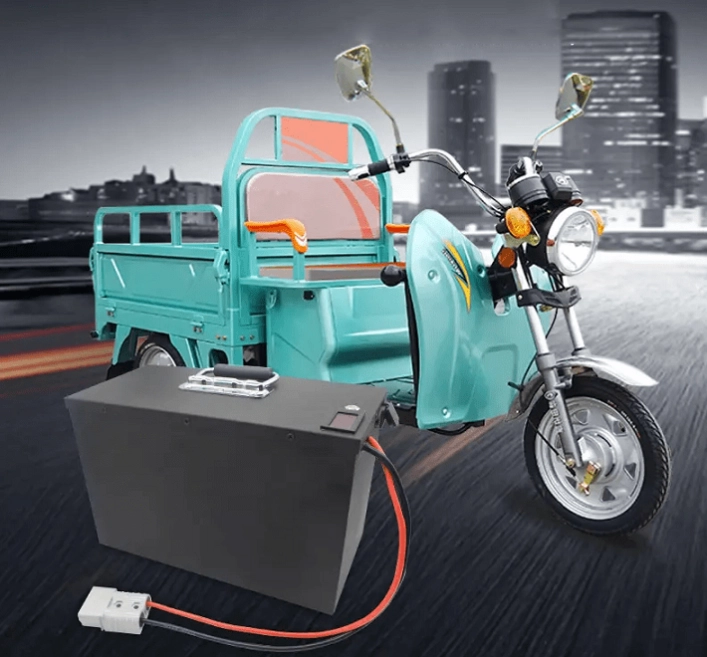
Fleet Battery Maintenance Guide Vol.1
How to Recover and Prevent Deeply Discharged Lithium Batteries in Electric Cargo Tricycles
Introduction
Lithium batteries are one of the most valuable components in commercial electric cargo tricycles.
For fleets operating in agriculture, industrial logistics, municipal services, and last-mile delivery, battery performance directly affects vehicle uptime, operating costs, and overall fleet reliability.
However, one of the most common battery-related issues is deep discharge caused by prolonged storage, excessive discharge, or improper charging practices.
This guide explains:
- what deep discharge is,
- how to recover a protected battery safely,
- and most importantly,
- how fleet operators can prevent it from happening.
1. What Is Deep Discharge?
Modern lithium batteries are protected by a Battery Management System (BMS).
When battery voltage falls below a predetermined safety threshold, the BMS disconnects charging and discharging circuits to prevent irreversible damage to the cells.
This protective action is commonly referred to as low-voltage protection or deep-discharge protection.
Typical symptoms include:
✔ Vehicle cannot start
✔ Original charger cannot initiate charging
✔ Battery appears completely dead
2. Common Causes of Deep Discharge
- Long-Term Storage
Vehicles stored for months without charging may gradually lose voltage due to natural self-discharge and standby power consumption.
- Excessive Discharge
Continuing to operate the vehicle after battery warnings appear can accelerate voltage depletion.
- Main Power Left On
GPS units, telematics systems, and display panels may continue drawing power even when the vehicle is not in use.
- Extreme Temperatures
Very high or very low ambient temperatures can increase battery stress and accelerate self-discharge.
3. Why Ordinary Chargers Should Not Be Used
When a lithium battery enters protection mode, many users attempt to use alternative chargers to force charging.
This is not recommended.
Lithium batteries require precise charging control and proper communication with the BMS.
Using incompatible chargers may result in:
- Charging failure
- Battery damage
- Reduced service life
- Potential safety risks
4. Safe Recovery Procedure
When a battery is protected due to low voltage, recovery should be performed using a charger or service device that supports:
Low-Voltage Recovery
or
BMS Wake-Up Function
Step 1
Inspect Battery Condition
Check for:
- Swelling
- Leakage
- Physical damage
- Burn marks
Step 2
Measure Output Voltage
Confirm whether the battery has entered low-voltage protection.
Step 3
Perform Controlled Wake-Up
Allow the BMS to re-establish normal operation.
Step 4
Switch Back to Original Charger
Complete a full charging cycle.
Step 5
Monitor Battery Performance
Verify normal charging, discharging, and temperature behavior.
5. Preventative Fleet Maintenance
The best recovery strategy is prevention.
Keep Battery Above 20%
Recharge before battery levels become critically low.
Monthly Inspection
For idle vehicles or spare batteries, perform supplementary charging every 30 days.
Proper Storage Environment
Store batteries in dry, ventilated locations away from extreme temperatures.
Monitor Battery Health
Track:
- Cycle count
- Remaining capacity
- State of Health (SOH)
Frequently Asked Questions
Q1. Can a deeply discharged battery still be used?
If the battery cells remain healthy and only BMS protection has been triggered, normal operation can usually be restored.
Q2. Will range decrease after recovery?
Short-term deep discharge generally has limited impact.
Long-term storage in a discharged state may permanently reduce battery capacity.
Q3. Can I use a modified power supply for recovery?
Not recommended.
Recovery should be performed using equipment specifically designed for lithium battery systems.
Conclusion
For commercial electric cargo tricycle fleets, battery management is not simply a maintenance task—it is an asset management strategy.
By implementing proper charging habits, scheduled inspections, and preventative maintenance procedures, fleet operators can significantly reduce battery failures, extend service life, and lower total cost of ownership (TCO).