
Sep 22, 2026Risk & Compliance
L2e-U Electric Cargo Tricycles in Spain: 2026 Buyer’s Guide for Farms, Vineyards, Resorts and Commercial Transport
Discover why L2e-U electric cargo tricycles (45 km/h) are revolutionizing Spanish agriculture, hospitality resorts, and ZBE urban delivery. Full 2026 TCO analysis & EU compliance checklist.
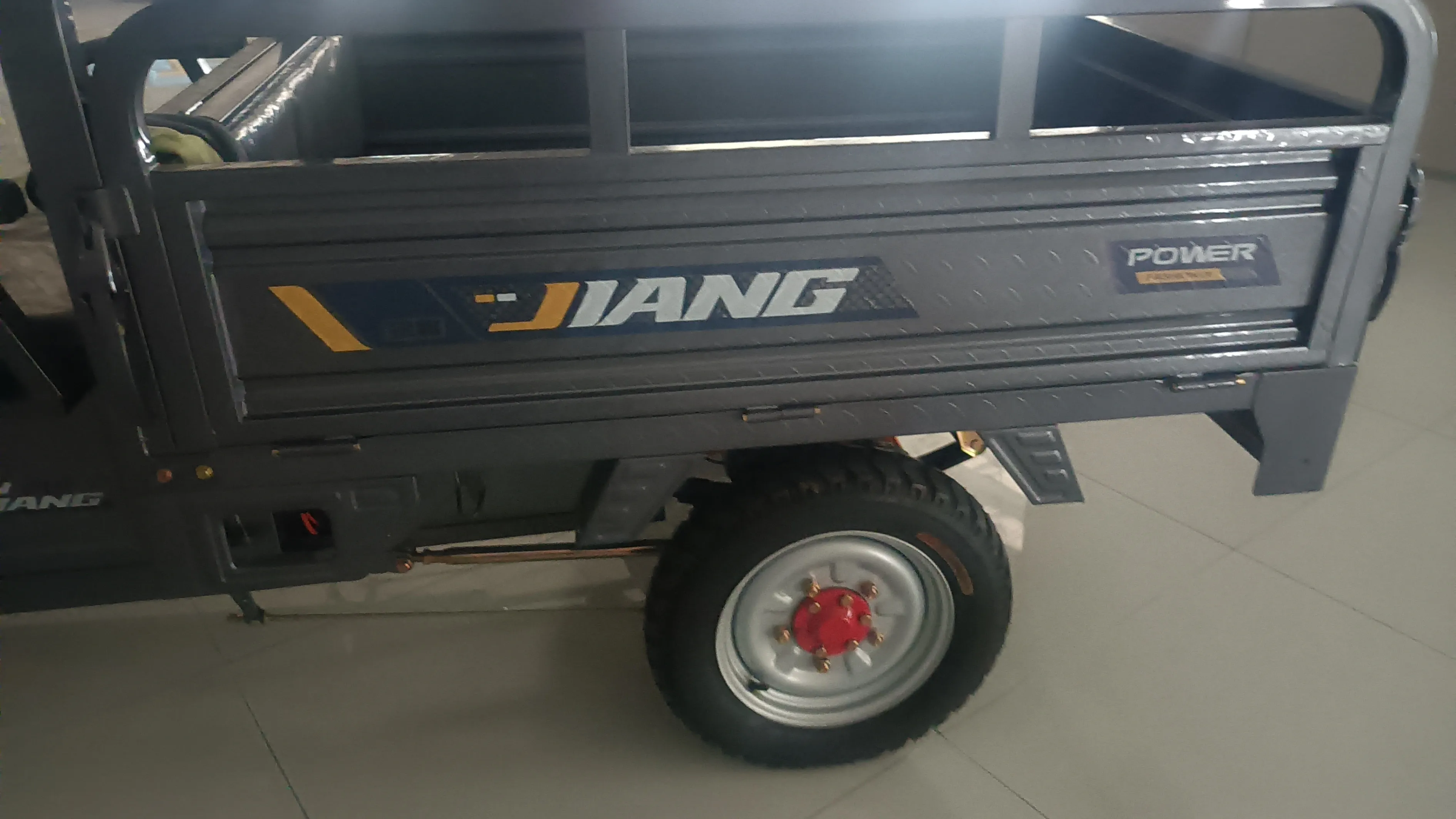
L2e-U Electric Cargo Tricycles in Spain: 2026 Buyer’s Guide for Farms, Vineyards, Resorts and Commercial Transport
Last updated: September 2026
Quick Answer
An L2e-U electric cargo tricycle is a three-wheel utility vehicle designed exclusively for goods transport under the EU L-category vehicle framework.
In Spain, it can be relevant for olive estates, vineyards, greenhouses, farms, hotels, resorts, industrial parks, municipal services and selected urban logistics operations.
However, an L2e-U should be evaluated as a road-legal motor vehicle, not simply as a larger e-cargo bike. Before commercial deployment, buyers should verify the vehicle's EU Type Approval, CoC, VIN, approved mass data, payload, Spanish registration, driving licence, insurance, ITV and local ZBE requirements.
For distributors, the most important question is not simply how much cargo a brochure says the vehicle can carry. It is whether the specific vehicle configuration, documentation and intended operating environment are suitable for the Spanish market.
Key Takeaways
- L2e-U is a specific EU vehicle subcategory for goods transport, not an e-cargo bicycle.
- The 270 kg L2e mass-in-running-order limit is not the same as legal payload.
- Final payload should be assessed from the approved vehicle configuration and relevant mass data.
- Spanish registration, licence, insurance and ITV requirements depend on the vehicle's registered category.
- An electric L2e-U may qualify for the DGT CERO environmental label, but ZBE access remains subject to local municipal rules.
- The standard configuration of our EU type-approved L2e-U models uses lead-acid batteries.
- Battery changes, cargo-body modifications and other major technical changes should be assessed before implementation.
- For distributors, CoC, VIN, type approval and after-sales support are as important as the vehicle itself.
1. What Is an L2e-U Electric Cargo Tricycle?
L2e-U is a subcategory within the European L2e three-wheel moped category.Under Regulation (EU) 168/2013, an L2e vehicle is defined by several classification criteria, including:
Criterion | L2e requirement |
Number of wheels | 3 |
Maximum design speed | 45 km/h |
Maximum continuous rated/net power | 4 kW |
Mass in running order | Within the L2e limit of 270 kg |
Seating positions | Maximum 2 |
L2e-U adds a specific utility requirement: the vehicle must be exclusively designed for the carriage of goods and have an appropriate open or enclosed loading bed, clearly separated from the occupant area by a rigid partition.
The loading area must also meet the regulatory requirements for dimensions and minimum loading volume.This distinction is important.A three-wheel electric vehicle with a cargo box is not automatically an L2e-U.
For a B2B purchase, the buyer should verify the actual approved vehicle category and supporting documentation rather than relying on a supplier's marketing description.
2. L2e-U vs E-Cargo Bike vs L5e: What Is the Difference?
Spanish buyers may encounter several types of electric three-wheel commercial vehicles.The most important distinction is their legal vehicle category.
Factor | E-Cargo Bike | L2e-U Electric Cargo Tricycle | L5e Utility Tricycle |
Legal framework | Bicycle/e-bike framework | EU L-category | EU L-category |
Vehicle type | Cycle/e-bike | Three-wheel moped | Powered tricycle |
Maximum design speed | Depends on bicycle category | ≤45 km/h | ≥45 km/h |
Goods transport | Model dependent | Specifically designed for goods | Utility/goods configurations available |
Road registration | Depends on bicycle classification | Required for road use | Required for road use |
Typical role | Light urban transport | Commercial short-distance utility | Larger/heavier three-wheel applications |
Main evaluation | Bike rules and specifications | Type approval, CoC and registration | Type approval and category-specific requirements |
L5e is not simply “the high-payload version of L2e”.Under EU Regulation 168/2013, L5e is a powered-tricycle category that includes vehicles that cannot be classified as L2e. L5e-B is specifically defined as a commercial tricycle designed as a utility vehicle and exclusively for goods transport.Therefore, payload alone should not be used to determine whether a vehicle is L2e-U or L5e.
For a professional buyer, the correct starting point is the vehicle's approved category and technical documentation.
3. Where Are L2e-U Electric Cargo Tricycles Useful in Spain?
Spain has a particularly diverse range of short-distance commercial transport applications.Unlike markets where electric cargo vehicles are mainly associated with parcel delivery, Spanish applications can include agriculture, tourism, industrial operations, municipal services and selected urban logistics.
3.1 Olive Estates and Agricultural Farms
Spain's agricultural sector includes extensive olive-growing areas, farms and mixed agricultural properties.
Potential applications include:Farm tools,Maintenance equipment,Fertilizer and supplies,Harvest containers,Spare parts,Small equipment,Internal material transport.
For a large agricultural property, the vehicle may make repeated short trips between fields, workshops, storage areas and processing facilities.In this environment, maneuverability, ground clearance, serviceability and operating cost may be more important than maximum road speed.
3.2 Vineyards and Wineries
Vineyards create a different operating environment.A vehicle may need to move between:Vineyard rows,Storage areas,Workshops,Processing facilities,Agricultural buildings.Important selection factors include:Overall width,Turning radius,Ground clearance,Cargo-bed dimensions,Load stability,Terrain conditions.
A narrow configuration can be more useful than a larger cargo box if the vehicle must operate between vineyard rows.
3.3 Greenhouses and Horticulture
Greenhouses and nurseries often require frequent movement of:Plants,Containers,Soil,Growing materials,Tools,Fertilizer,Maintenance equipment.Here, compact dimensions and maneuverability can become key purchasing criteria.
If the vehicle will operate inside enclosed facilities, buyers should also evaluate ventilation, charging arrangements, floor conditions and operating procedures rather than assuming that any electric vehicle is automatically suitable for indoor use.
3.4 Hotels, Resorts and Campsites
Spain's tourism sector creates another potential application.Large hotels, resorts and campsites may have internal roads and service areas connecting:Guest facilities,Kitchens,Maintenance buildings,Gardens,Storage areas,Waste collection points.Potential applications include:Gardening materials,Cleaning supplies,Maintenance tools,Internal deliveries,Waste and service transport.
For coastal properties, corrosion protection and weather resistance can also become relevant specification considerations.
3.5 Industrial Parks and Corporate Campuses
Industrial and commercial sites often require repeated short-distance movement rather than long-distance transport.
An L2e-U may be considered for:Internal logistics,Warehouse-to-workshop movement,Maintenance,Facility services,Tool transportation,Spare-parts delivery.The business case often comes from reducing the need to use a conventional van for small, frequent trips.
3.6 Municipal Services and Contractors
Potential municipal and contractor applications include:Maintenance,Park services,Waste collection,Facility support,Groundskeeping,Equipment transport.
For public-sector or municipal projects, however, vehicle documentation and contract-specific technical requirements need to be checked carefully.
3.7 Urban and Last-Mile Logistics
L2e-U vehicles may also be considered for selected urban delivery operations.Possible applications include:Local commercial delivery,Industrial-area logistics,Service routes,Short-distance distribution,Facility-to-facility transport.
However, urban deployment requires additional attention to:Registration,ZBE access,Loading and unloading rules,Parking,Municipal restrictions,Vehicle dimensions.
An L2e-U is a motor vehicle, not an e-cargo bike. It should therefore be evaluated under the relevant Spanish road, registration, insurance and municipal rules.
4. Why Is Spain Different from Northern European Markets?
Spain's operating environment is diverse.A single L2e-U specification may not be equally suitable for every region or industry.
Spain combines:Large olive-growing areas,Vineyards and wineries,Greenhouse agriculture,Tourism and resort infrastructure,Industrial parks,Historic urban areas,Expanding ZBE zones,Coastal environments,Hot summers,Colder inland and northern conditions.This creates demand for application-specific commercial vehicles, rather than one generic electric cargo tricycle.
For example:
- A vineyard operator may prioritize narrow dimensions.
- A resort may prioritize a covered cargo body and corrosion protection.
- An industrial customer may prioritize serviceability and spare-parts availability.
- An urban delivery operator may prioritize registration and ZBE compatibility.
- The vehicle should therefore be specified around the actual duty cycle.
5. Public Roads vs Private Sites: What Changes?
This distinction is often overlooked during the purchasing process.
Private-site operation:A vehicle used exclusively Industrial compounds,private campuses,many have a different operating context from a vehicle regularly used on public roads.
Public-road operation:If the vehicle enters public roads, buyers need to consider:Vehicle registration,Insurance,Driving licence,Road traffic rules,Technical inspection,Approved vehicle configuration.
Private-site use should therefore not be treated as a shortcut around road-vehicle requirements.The first question a buyer should answer is:Will the vehicle ever operate on public roads?This should be established before the vehicle specification is finalized.
6. What EU Type Approval, CoC and VIN Documents Should a Buyer Check?
For a European B2B purchase, documentation is part of the product.
EU Type Approval:The type approval establishes the technical characteristics of the approved vehicle type.A buyer should confirm:Vehicle category,Approved variant/version,Relevant mass information,Power,Speed,Body configuration,Other applicable technical parameters.
Certificate of Conformity — CoC:The Certificate of Conformity (CoC) is associated with the individual completed vehicle and confirms conformity with the approved type.For a distributor, the CoC is particularly important because the vehicle will ultimately need to be identified and registered according to the applicable national process.
VIN:The VIN provides individual vehicle identification and traceability.A professional supplier should be able to explain the relationship between:
Type Approval → VIN → CoC → Individual Vehicle:rather than simply sending a generic approval certificate.
7. What Payload Can an L2e-U Electric Cargo Tricycle Legally Carry?
Is the L2e 270 kg limit the same as legal payload?
No.This is one of the most important points for buyers to understand.The L2e classification includes a 270 kg mass-in-running-order limit. This is a vehicle classification parameter. It should not be interpreted as a maximum cargo payload.
There is no universal statement such as:“Every L2e-U can legally carry 300 kg, 500 kg or 700 kg.”
The permissible payload of a specific vehicle depends on its approved technical configuration and relevant mass data.
A practical assessment should consider:Technically permissible maximum mass,Mass in running order,Final battery configuration,Cargo body,Fixed accessories,Driver or crew mass where relevant,Axle loading,Approved loading area,Individual CoC and registration data
Manufacturer-stated load capacity vs legal payload
A manufacturer may advertise a model with a particular load capacity for commercial or engineering purposes.That figure should not automatically be treated as the legally permissible payload of a registered road vehicle.
For European B2B purchasing, the correct approach is:Check the approved vehicle configuration and individual CoC rather than relying on brochure payload figures alone.This distinction is particularly important when comparing large cargo-bed models.
8. What Driving Licence Is Required for an L2e-U in Spain?
For an L2e-U registered as a three-wheel moped (ciclomotor de tres ruedas) in Spain:
- AM licence: permitted. The minimum age is 15.
- B licence: permitted. A Spanish B licence also authorizes the holder to drive mopeds. The minimum age for a B licence is 18.
Therefore, a Spanish driver with a valid AM or B licence can drive an L2e-U, provided the vehicle is registered in the corresponding L2e/moped category.
For commercial fleets, this means an L2e-U does not require a special truck or van driving licence. The key requirement is that the vehicle is correctly classified and registered as an L2e three-wheel moped.
9. Can an L2e-U Receive a DGT CERO Environmental Label?
Potentially, yes.The DGT environmental-label framework includes ciclomotores, triciclos, cuadriciclos and motorcycles classified in the vehicle register as battery-electric vehicles and other qualifying low-emission technologies.
For a battery-electric L2e-U, the relevant environmental classification depends on the vehicle's technical and registration data.
However:CERO does not mean automatic unrestricted access to every ZBE in Spain.
The environmental label and the local access rules are separate questions.
10. Can an L2e-U Enter Spanish ZBE Zones?
Yes — a registered electric L2e-U can generally enter Spanish ZBE zones when it has a DGT CERO environmental classification.
For a pure-electric L2e-U registered in Spain, the vehicle can receive the DGT CERO (0 Emisiones) environmental classification. In major Spanish cities, CERO vehicles are generally permitted to enter ZBE areas.
Madrid ZBE allows vehicles with a CERO environmental classification to circulate. The same applies to Madrid's special low-emission areas, including Distrito Centro and Plaza Elíptica, where CERO-classified motorcycles and mopeds can circulate without the restrictions applied to vehicles without an environmental label.For an electric L2e-U correctly registered and classified as CERO, Madrid is therefore suitable for urban ZBE operation.
Barcelona's ZBE framework explicitly includes electric mopeds, three-wheelers, quadricycles and motorcycles classified in the DGT vehicle registry as battery-electric vehicles (BEV) under the CERO category.Therefore, a pure-electric L2e-U registered in Spain and receiving the CERO classification can enter Barcelona's ZBE.
València's ZBE restrictions primarily target the most polluting vehicles without an environmental label, including certain passenger cars, motorcycles and mopeds.
A pure-electric L2e-U with a CERO classification is therefore not within the restricted vehicle group. The València ZBE operates 24 hours a day, 365 days a year, so the CERO classification is particularly relevant for commercial vehicles operating regular urban routes.
Seville allows vehicles carrying the 0 Emisiones, ECO, C or B environmental classifications to enter, circulate and park within its ZBE.The city also provides specific treatment for motorcycles and mopeds, meaning an electric L2e-U does not face a general ZBE access ban.
What Does This Mean for a Commercial Buyer?
For the four major cities above:
City | Electric L2e-U with DGT CERO | ZBE access |
Madrid | CERO | Yes |
Barcelona | CERO | Yes |
València | CERO | Yes |
Seville | CERO | Yes |
The important point is that “electric” alone is not the legal basis for ZBE access. The vehicle must be properly registered in Spain and receive the corresponding DGT environmental classification.
For a B2B buyer, this makes the compliance chain straightforward:
EU Type Approval → Spanish registration → DGT vehicle classification → CERO → ZBE access
However, ZBE access does not mean that every road, loading area, parking space or restricted street in a city is automatically available to the vehicle. Separate local traffic, loading/unloading, parking and access-control rules may still apply.
Therefore, for a commercial L2e-U intended for urban delivery, the relevant question is not simply:“Is an electric cargo tricycle allowed in ZBE?”
It is:“Is the registered L2e-U classified as CERO, and does that classification permit access to the specific urban area where the vehicle will operate?”
For Madrid, Barcelona, València and Seville, the answer for a properly registered pure-electric CERO L2e-U is generally yes.
11. When Does an L2e-U Vehicle Need ITV in Spain?
Spanish ITV requirements are determined by vehicle category and registration status.Under the current Royal Decree 920/2017 framework, “Resto L” vehicles — including two- or three-wheel motor vehicles intended for road use — are generally exempt from periodic ITV for the first four years after first registration and then subject to inspection every two years.
For commercial fleet planning, however, buyers should verify the exact registered vehicle category, registration date and applicable ITV requirements.This is especially important when comparing an L2e-U with another three-wheel vehicle category.A distributor should therefore include ITV in the vehicle's lifecycle planning rather than treating it as an administrative issue after the sale.
12. Can an L2e-U Use Spanish Motorways and Autovías?
No.Spanish traffic regulations prohibit ciclomotores from using autopistas and autovías.Because an L2e is classified within the three-wheel moped framework, this restriction is relevant when planning public-road operation.
For commercial users, this means route planning should consider:Local roads,Urban roads,Regional roads,Alternative routes,Customer operating area.An L2e-U is designed for short-distance utility transport, so a business requiring regular motorway or autovía travel should evaluate a different vehicle category.
13. What Battery Configuration Is Used for L2e-U Models?
Battery selection should be considered as part of the vehicle's overall technical configuration.For our standard EU type-approved L2e-U models, lead-acid batteries are used as the standard configuration.
This provides a straightforward and serviceable solution for many commercial applications where buyers prioritize:Initial vehicle cost,Established technology,Straightforward servicing,Replacement availability,Predictable operating requirements.
What about lithium batteries?
Lithium configurations can be considered for specific projects, but they should not be treated as a simple battery replacement.Changing the battery system may affect:Vehicle mass,Weight distribution,Electrical architecture,Charger,Battery management,Battery mounting,Other technical characteristics.
For an EU type-approved vehicle, any alternative battery configuration should therefore be assessed separately for technical and compliance requirements.For standard L2e-U projects, the recommended approach is to use the approved standard configuration unless a separate engineering and compliance assessment has been completed.
14. What Technical Features Matter for Different Spanish Applications?
The right configuration depends on the working environment.
Spanish Use Case | Vehicle Features to Evaluate | Key Compliance / Operational Check |
Olive estate | Ground clearance, durable cargo body, easy cleaning | Mass, bodywork, road crossings |
Vineyard | Narrow width, turning radius, stable loading | Approved dimensions and loading |
Greenhouse | Compact body, maneuverability, clean operation | Battery/charging and operating environment |
Hotel/resort | Covered cargo area, quiet operation, corrosion protection | Insurance, road/private-site use |
Industrial park | Durable frame, serviceability, parts support | Warranty and fleet support |
Municipal service | Specialized body, work equipment, visibility | Registration and contract requirements |
Urban delivery | Enclosed cargo box, lockable storage | DGT registration and ZBE rules |
The important point is that the largest cargo body is not necessarily the best commercial configuration.A smaller vehicle that fits the customer's operating environment can produce better utilization and lower operating complexity.
15. What About Dump Bodies, Canopies and Other Modifications?
Commercial users may request:Hydraulic dump bodies,Enclosed cargo boxes,Canopies,Tool compartments,Special equipment,Different tyres,Reinforced structures.These modifications can be commercially useful, but they should be evaluated against the approved vehicle configuration.
Changes can affect:Vehicle mass,Axle loads,Dimensions,Stability,Braking,Lighting,
Electrical systems,Vehicle classification or approval status.For this reason, significant modifications should be discussed before production, not after the vehicle has already been registered.
16. L2e-U Selection Matrix for Spanish Operators
A practical purchasing decision can start with the operating environment.
Application | Recommended Vehicle Focus | Main Check | Typical Buyer Question |
Olive estate | Durable cargo body, suitable clearance | Mass, bodywork, road use | Can it handle farm routes and tools? |
Vineyard | Narrow body, tight turning radius | Dimensions, loading | Can it move between vineyard rows? |
Greenhouse | Compact dimensions, maneuverability | Charging and operating environment | Can it operate efficiently in confined areas? |
Hotel/resort | Covered cargo body, corrosion protection | Insurance, public/private roads | Can staff use it across the property? |
Industrial park | Rugged cargo setup, parts support | Warranty and service | Can we deploy several units? |
Municipal contractor | Application-specific equipment | Registration and contract requirements | Does the vehicle meet the tender specification? |
Urban delivery | Enclosed cargo box, secure storage | ZBE and registration | Can it operate in the target city? |
This approach is more useful than selecting a vehicle based only on motor power or advertised payload.
17. Total Cost of Ownership for Spanish Commercial Fleets
Purchase price is only one part of the cost.A useful TCO model includes:Purchase price + energy cost + maintenance + battery replacement + insurance + registration/inspection costs + downtime.For a commercial fleet, buyers should consider:Purchase price:Compare complete vehicle cost rather than the basic chassis price.
Energy:Calculate based on actual annual mileage and local electricity costs.
Maintenance:Consider:Brakes,Tyres,Suspension,Steering components,Electrical components,Charger,Controller,Bodywork
Battery replacement:The replacement cycle depends on battery technology, operating conditions, charging habits and usage intensity.
Insurance and registration:Include the actual Spanish operating requirements.
ITV:Include periodic inspection costs after the applicable exemption period.
Downtime:For a commercial vehicle, downtime can be more expensive than a small difference in purchase price.
The most useful question is therefore:What does the vehicle cost per working day or per operating kilometre?
- Common Mistakes When Buying an L2e-U for Spain
Common Mistake | Why It Matters | Better Approach |
Assuming brochure payload is legal payload | Marketing figures may not represent approved mass limits | Check CoC and approved mass data |
Treating L2e-U like an e-cargo bike | Different legal framework | Check registration, licence and insurance |
Using “EEC approved” as the only proof | The term alone is too vague | Request type-approval documentation |
Changing battery without assessment | May affect approved configuration | Evaluate technical compliance first |
Changing the cargo body without checking | Mass and dimensions may change | Confirm configuration before production |
Assuming CERO means universal ZBE access | ZBE rules are local | Check the target municipality |
Ignoring ITV and insurance | Creates hidden operating costs | Include them in TCO |
Selecting the biggest model automatically | Large does not always mean better utilization | Match vehicle to duty cycle |
Choosing by motor power alone | Power does not determine commercial suitability | Evaluate route, load, terrain and operating cycle |
19. Supplier Documentation Checklist
Before placing an order, a Spanish distributor should request and verify the following:
Document / Information | What to Verify |
EU Type Approval | Vehicle category, variant/version and approved technical parameters |
CoC | VIN, mass data and individual vehicle conformity |
VIN/WMI | Manufacturer identity and vehicle traceability |
Battery specification | Battery type, voltage, capacity and charger compatibility |
Bodywork information | Dimensions, loading area and fixed equipment |
Technical specification | Motor, speed, dimensions and mass |
Packing list | CBU/SKD configuration and components |
Spare-parts list | Brakes, tyres, lights, charger, controller and other key parts |
Warranty terms | Vehicle, electrical system and battery coverage |
User manual | Operating and maintenance instructions |
Shipping documents | Applicable transport documents for the actual battery configuration |
For lithium battery shipments, additional dangerous-goods transport documentation may be required depending on the battery and transport method. For the standard lead-acid configuration, the applicable transport documentation should be confirmed according to the actual battery specification and shipping arrangement.
20. Import, SKD and CBU Considerations for Spanish Distributors
For a distributor importing L2e-U electric cargo tricycles from China, the project involves more than choosing a vehicle.
Before ordering, confirm:
- Vehicle category
- EU Type Approval
- VIN/WMI
- CoC process
- Approved mass data
- Battery configuration
- Cargo-body configuration
- Warranty
- Spare parts
- Packing method
- Shipping arrangement
CBU:A fully assembled vehicle is simpler for customers without local technical facilities.The disadvantage is that the completed vehicle occupies more shipping volume.
SKD:It can reduce shipping volume and provide greater flexibility for distributors.A vehicle can arrive substantially assembled, with selected components requiring local installation.For distributors without a dedicated assembly operation, SKD can be a practical compromise between logistics efficiency and local handling.
CKD:It is more appropriate when the distributor has:Workshop facilities,Technicians,Tools,Quality-control procedures,Sufficient annual volume,A long-term local assembly strategy
SKD or CKD should not be treated as a compliance shortcut. The final vehicle must still correspond to the applicable approved configuration.
21. Can Two Different L2e-U Models Be Mixed in One 40HQ?
Yes, subject to the final packing plan and container-loading calculation.For a distributor entering the Spanish market, combining two models in one shipment can be useful for testing different applications.
For example:
- A smaller model for facility or urban operations
- A larger cargo model for agricultural or industrial applications
However, we generally recommend limiting a mixed shipment to two models per 40HQ.Too many models can increase:
- Model-specific parts
- Accessory sorting
- Local assembly complexity
- Spare-parts management
- After-sales complexity
A mixed-model shipment should therefore have:
- Separate parts packages
- Clear model labels
- Model-specific packing lists
- Assembly instructions
- A confirmed loading plan
This balances container utilization with practical local handling.
22. Frequently Asked Questions
Can an L2e-U carry 500 kg or 700 kg?
There is no universal legal payload figure for every L2e-U.A manufacturer may state a commercial load capacity, but the legal payload of an individual road-registered vehicle must be evaluated using its approved mass configuration, CoC and applicable national requirements.
Can two models be mixed in one 40HQ?
Yes, subject to the final packing and loading plan.For practical reasons, two models per container is generally easier to manage than a larger number of different models.
23. Key Questions Before Buying an L2e-U in Spain
Before placing an order, a Spanish distributor or commercial operator should be able to answer:
Vehicle classification
- Is the vehicle actually L2e-U?
- Is it exclusively designed for goods transport?
- Does the loading area meet the approved configuration?
Mass and payload
- What is the mass in running order?
- What is the technically permissible maximum mass?
- What does the CoC specify?
- What are the permitted axle loads?
Is the advertised payload a manufacturer-stated figure or an approved legal payload?
Documentation
- Is EU Type Approval available?
- Is a CoC issued for every vehicle?
- Is the VIN traceable?
- Can the technical data be independently verified?
Battery
- What is the standard battery type?
- Is it part of the approved configuration?
- What charger is supplied?
- What are the expected operating and maintenance requirements?
Spain
- How will the vehicle be registered?
- Which driving licence applies?
- What insurance is required?
- When does ITV apply?
- What ZBE rules apply in the target city?
Commercial
- CBU or SKD?
- How many units fit in a 40HQ?
- Can two models be mixed?
- What spare parts are available?
- What is the warranty?
- What is the production lead time?
24. Conclusion: Is an L2e-U Suitable for Your Spanish Business?
An L2e-U electric cargo tricycle is not a universal replacement for a van or an e-cargo bike.Its value is more specific.It can fit commercial operations that require:
- Short-distance goods transport
- Frequent internal trips
- Compact vehicle dimensions
- Three-wheel stability
- Low-speed commercial operation
- Dedicated cargo space
- Lower operating complexity than a conventional van
In Spain, potential applications include olive estates, vineyards, farms, greenhouses, hotels, resorts, industrial parks, municipal services, warehouses and selected urban delivery operations.
The right L2e-U configuration is therefore the one that matches the actual duty cycle, approved technical configuration, operating environment and Spanish regulatory requirements.
Sources and Further Verification
This guide summarizes common compliance considerations for commercial buyers. It is not a substitute for vehicle-specific legal or registration advice.
Before importing or registering an L2e-U, buyers should verify the final requirements using current official sources, including:
- EU Regulation (EU) 168/2013 — vehicle categories and type-approval framework
- DGT — driving licences and environmental classification
- BOE / Royal Decree 920/2017 — Spanish ITV requirements
- BOE / Spanish traffic regulations — public-road restrictions
- Municipal ZBE regulations — city-specific access requirements
Final vehicle category, registration, ITV periodicity, environmental label, ZBE access and payload should always be verified for the specific vehicle, configuration and intended use.
Request a Spain L2e-U Configuration Review
Planning an L2e-U project for Spain?
Send the following information:
- Intended application
- Target payload
- Terrain
- Maximum vehicle width
- Daily operating distance
- Private-site or public-road use
- Target city or ZBE
- Expected annual volume
We can then evaluate the appropriate L2e-U configuration, approved mass and payload information, CoC checklist, battery configuration, bodywork, SKD packing arrangement and documentation requirements before production.
Electric Cargo Tricycles in Germany 2026: A B2B Buyer’s Guide to L2e-U Utility Vehicles