
Field InsightsField Insights
2026年3月11日
Why Electric Cargo Tricycles Are Ideal for Last-Mile Delivery: A Bottled Water Logistics Case Study
Why Electric Cargo Tricycles Are Ideal for Last-Mile Delivery: A Bottled Water Logistics Case Study Table of Contents 1. The Growing Challenge of Last-Mile Delivery 2. The Operational Reality of Bot
Why Electric Cargo Tricycles Are Ideal for Last-Mile Delivery: A Bottled Water Logistics Case Study
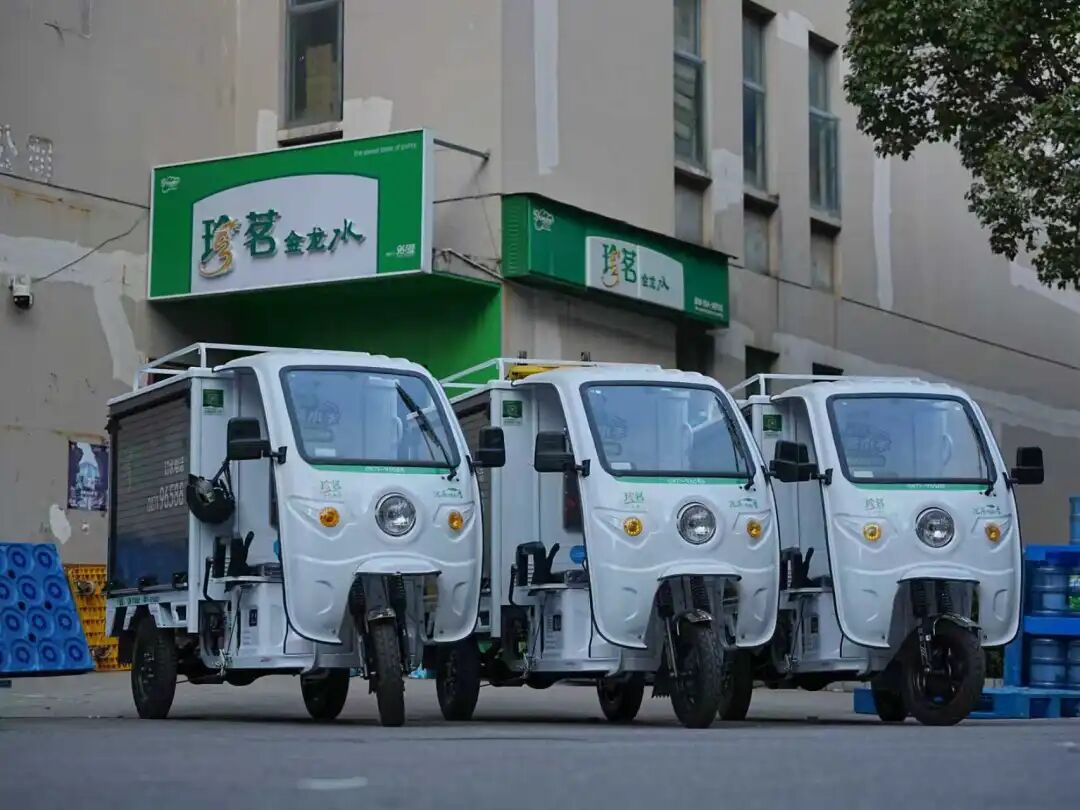
Table of Contents
1.The Growing Challenge of Last-Mile Delivery
2.The Operational Reality of Bottled Water Distribution
3.Why Electric Cargo Tricycles Are a Practical Solution
4.Case Study: Electric Cargo Vehicles in Bottled Water Delivery
5.Industry Data: The Growth of Last-Mile Logistics
6.Policy Drivers in Europe and the Middle East
7.The Expanding Role of Electric Cargo Vehicles in Urban Logistics
8.FAQ: Electric Cargo Tricycles for Commercial Delivery
The Growing Challenge of Last-Mile Delivery
Last-mile delivery has become one of the most complex and expensive parts of modern logistics systems.
With the rapid growth of e-commerce and urban consumption, logistics companies must deliver goods more frequently and more efficiently within dense city environments. However, traditional delivery vehicles often struggle to meet these operational demands.
Large vans and trucks provide sufficient cargo capacity but face several limitations:
- difficulty accessing narrow residential streets
- parking restrictions in dense urban areas
- high fuel and operating costs
Two-wheel delivery vehicles, on the other hand, offer excellent mobility but often lack sufficient cargo capacity for heavier goods.
As a result, many logistics operators are searching for a middle-ground vehicle solution—one that combines maneuverability with practical cargo capacity.
Electric cargo tricycles are increasingly emerging as a viable answer to this challenge.
The Operational Reality of Bottled Water Distribution
Unlike parcel delivery, bottled water distribution involves several unique operational characteristics:
- heavy cargo weight per delivery
- repeated daily delivery routes
- direct household delivery
- frequent stop-and-go operations
These requirements place significant pressure on delivery vehicles.
For many bottled water companies, the most difficult stage of the supply chain is not production or warehouse distribution, but the final delivery from local stations to residential communities.
Traditional vans often face access limitations in residential neighborhoods, while motorcycles or scooters cannot safely carry heavy water containers.
This creates a logistical gap that requires a more specialized delivery vehicle.
Why Electric Cargo Tricycles Are a Practical Solution
Electric cargo tricycles combine the key advantages of both small delivery vehicles and larger logistics trucks.
High maneuverability in urban environments
Three-wheel cargo vehicles can navigate narrow streets, residential complexes, and densely populated urban districts more easily than traditional vans.
This improves delivery efficiency and reduces route time.
Sufficient payload capacity
Compared with two-wheel vehicles, electric cargo tricycles provide significantly higher payload capacity, making them suitable for transporting heavy goods such as bottled water.
Lower operating costs
Electric powertrains reduce fuel costs and simplify vehicle maintenance, helping logistics operators lower long-term operational expenses.
Improved driver safety and comfort
Many modern electric cargo vehicles include enclosed cabins or reinforced cargo structures, improving driver safety and working conditions.
Case Study: Electric Cargo Vehicles in Bottled Water Delivery
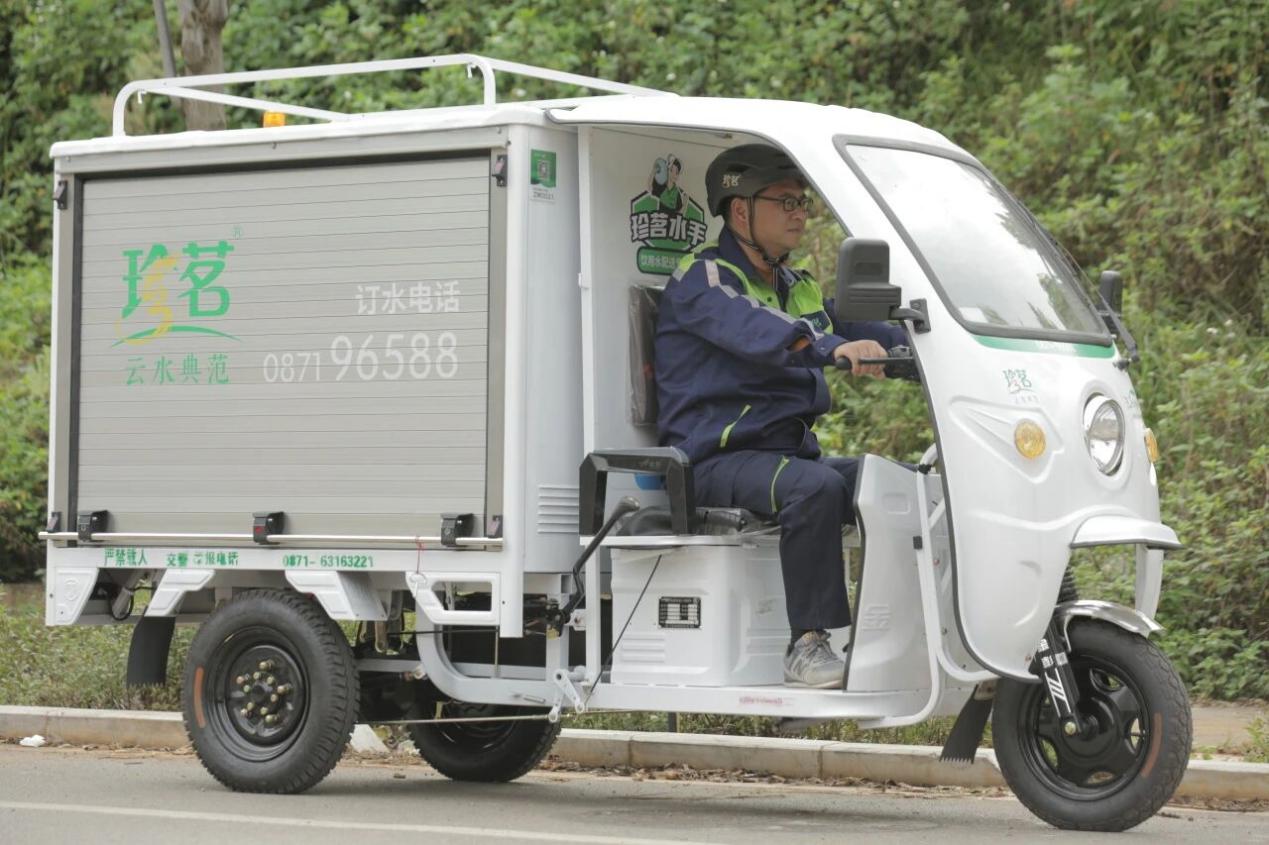
A practical example of this vehicle solution can be seen in Kunming, China, where a bottled water company introduced a fleet of electric cargo tricycles for local delivery operations.
The company had already built a mature production and distribution network, with multiple production facilities and digital product traceability systems.
However, the final delivery stage—from neighborhood distribution stations to residential customers—remained a persistent operational bottleneck.
To address this challenge, the company deployed 33 electric cargo vehicles specifically designed for bottled water delivery.
These vehicles were equipped with:
- reinforced cargo compartments for heavy loads
- GPS positioning systems for route monitoring
- reversing radar and onboard safety recorders
- standardized vehicle licensing and driver certification
After the vehicles were deployed, delivery workers reported improved efficiency and reduced physical strain during daily operations.
This case illustrates how scenario-specific vehicle design can significantly improve last-mile logistics efficiency.
Industry Data: The Rapid Growth of Last-Mile Logistics
Global logistics trends are further accelerating the demand for specialized delivery vehicles.
Research indicates that last-mile delivery can account for up to 40–50% of total logistics costs, making it the most expensive stage of the supply chain.
At the same time, urban freight demand continues to increase.
International transport studies estimate that urban freight transport activity could grow by more than 40% by 2050, driven by population growth and urbanization.
The market for electric commercial vehicles is also expanding rapidly. Industry forecasts suggest that the global electric commercial vehicle market could exceed USD 190 billion by 2030.
These trends are pushing logistics operators to redesign their vehicle fleets using a combination of vehicle types optimized for different delivery scenarios.
Large electric trucks may handle long-distance freight transport, while smaller vehicles—such as electric cargo tricycles and compact electric utility vehicles—play an increasingly important role in short-distance distribution.
Policy Drivers in Europe and the Middle East
In addition to operational efficiency, government policy is also accelerating the transition toward electric logistics vehicles.
Across Europe, many cities are introducing Zero-Emission Freight Zones, which restrict high-pollution delivery vehicles in urban centers.
By 2030, dozens of European cities are expected to implement these low-emission logistics zones, requiring delivery companies to adopt cleaner vehicle technologies.
The European Union has also introduced stricter emissions standards for commercial vehicles, targeting CO₂ emission reductions of 45% by 2030, 65% by 2035, and up to 90% by 2040.
These regulations are pushing logistics companies to electrify their vehicle fleets and explore alternative delivery solutions.
Meanwhile, countries in the Middle East are also accelerating sustainable mobility strategies.
For example, the UAE Net Zero 2050 strategy includes major investments in electric mobility and charging infrastructure. Cities such as Dubai are gradually expanding the use of electric vehicles in public transport and urban mobility systems.
As sustainability regulations continue to evolve, logistics operators across both Europe and the Middle East are increasingly exploring compact electric cargo vehicles for urban distribution.
The Expanding Role of Electric Cargo Vehicles in Urban Logistics
Electric cargo vehicles are gradually filling an important operational gap between small two-wheel delivery scooters and full-size commercial vans.
In many logistics scenarios, neither extreme provides the ideal balance of accessibility and cargo capacity.
Electric cargo tricycles offer several advantages:
- higher payload capacity than two-wheel vehicles
- easier access to residential areas compared with vans
- lower energy consumption and operating costs
- flexible deployment for small and medium logistics fleets
Because of these characteristics, electric cargo vehicles are now being adopted across a wide range of logistics environments.
Typical application scenarios include:
- parcel and express delivery
- bottled water distribution
- grocery and food logistics
- industrial park transport
- warehouse and port internal logistics
- facility maintenance transport
As cities continue to prioritize sustainability and efficient urban mobility, electric cargo vehicles are expected to become an increasingly important component of future last-mile delivery systems.
Rather than replacing all delivery vehicles, they complement existing logistics fleets by providing a practical solution for short-distance, high-frequency urban distribution.
FAQ: Electric Cargo Tricycles for Commercial Logistics
What is an electric cargo tricycle?
An electric cargo tricycle is a three-wheel electric vehicle designed for transporting goods. It offers higher load capacity than two-wheel delivery vehicles while maintaining excellent maneuverability in urban environments.
Why are electric cargo vehicles suitable for last-mile delivery?
Electric cargo vehicles combine cargo capacity, low operating costs, and the ability to access narrow urban streets, making them ideal for short-distance logistics and community delivery services.
Are electric cargo tricycles suitable for industrial operations?
Yes. Industrial-grade electric cargo vehicles can be designed with reinforced frames, higher payload capacity, and durable components to support high-frequency commercial logistics operations.